
The thing nobody says about toys and intimacy
Let's be real: most couples bring a toy into the bedroom because something feels off. Maybe sex has become routine. Maybe one partner's pleasure has been quietly fading. Maybe there's resentment bundled up in the silence. The toy itself isn't going to fix that. But the conversation that has to happen first? That's where everything changes.
A lemon clitoral vibrator isn't a band-aid. It's permission to start talking about what you actually want.
Why connection breaks down first, sensation second
Here's what I see in my practice again and again: couples don't lose physical chemistry because the body stops working. They lose it because they stop asking. Years go by. Patterns lock in. You both assume you know what the other person likes. You're often wrong, and you both know it, and nobody says anything. A vibrator can't fix that dynamic on its own. But it can be the moment you say "Hey, I want to figure this out together."
When you introduce a toy intentionally, with conversation first, you're actually saying: "Your pleasure matters to me. I want to know you better. Let's try something that might feel different." Those words matter more than the device.
The conversation before the device
I recommend starting here, not in bed:
Step 1: Pick a moment that isn't sexual. Dinner, a walk, somewhere you're both clothed and calm. Say something like: "I've been thinking about us, about sex, and I want to try something that might feel really good. There's a clitoral vibrator I've read about. Would you want to explore that together?"
Notice what you're doing: you're expressing intent ("I've been thinking about us"), you're being specific (naming what you want to try), and you're making it collaborative ("together"). That's the real work.
Step 2: Listen to the response without defending. If your partner seems hesitant, curious, or confused, good. Those are all starting points. If they say "I don't know what that is," explain: a lemon vibrator is a clitoral suction toy that uses gentle air-pulse technology instead of vibration. It stimulates the clitoris without intense friction, which can feel completely different than traditional vibrators. If they ask "Does that mean I'm not enough?" answer honestly: "No. It means I want to explore what feels best for you, and I want you to feel amazing."
Step 3: Read together or watch together. Helo Nancy's Slem has guides that explain how lemon vibrators work. Looking at this information side-by-side removes some of the vulnerability. You're learning together, not one person convincing the other.
The first time: managing expectations
Most people expect the first time with a new toy to be mind-blowing. It usually isn't. And that's okay.
Set a low bar intentionally. Your goal is not "best orgasm ever." Your goal is "we tried something new and we felt connected." That's the win.
Here's what I tell couples: build in a cool-down conversation. Not right after sex when you're both tired. Maybe 20 minutes later, over water, lying in bed. Ask simple things: "That felt different, right?" or "What was your favorite part?" or "Do you want to try it again?" The conversation is the point. You're checking in. You're paying attention.
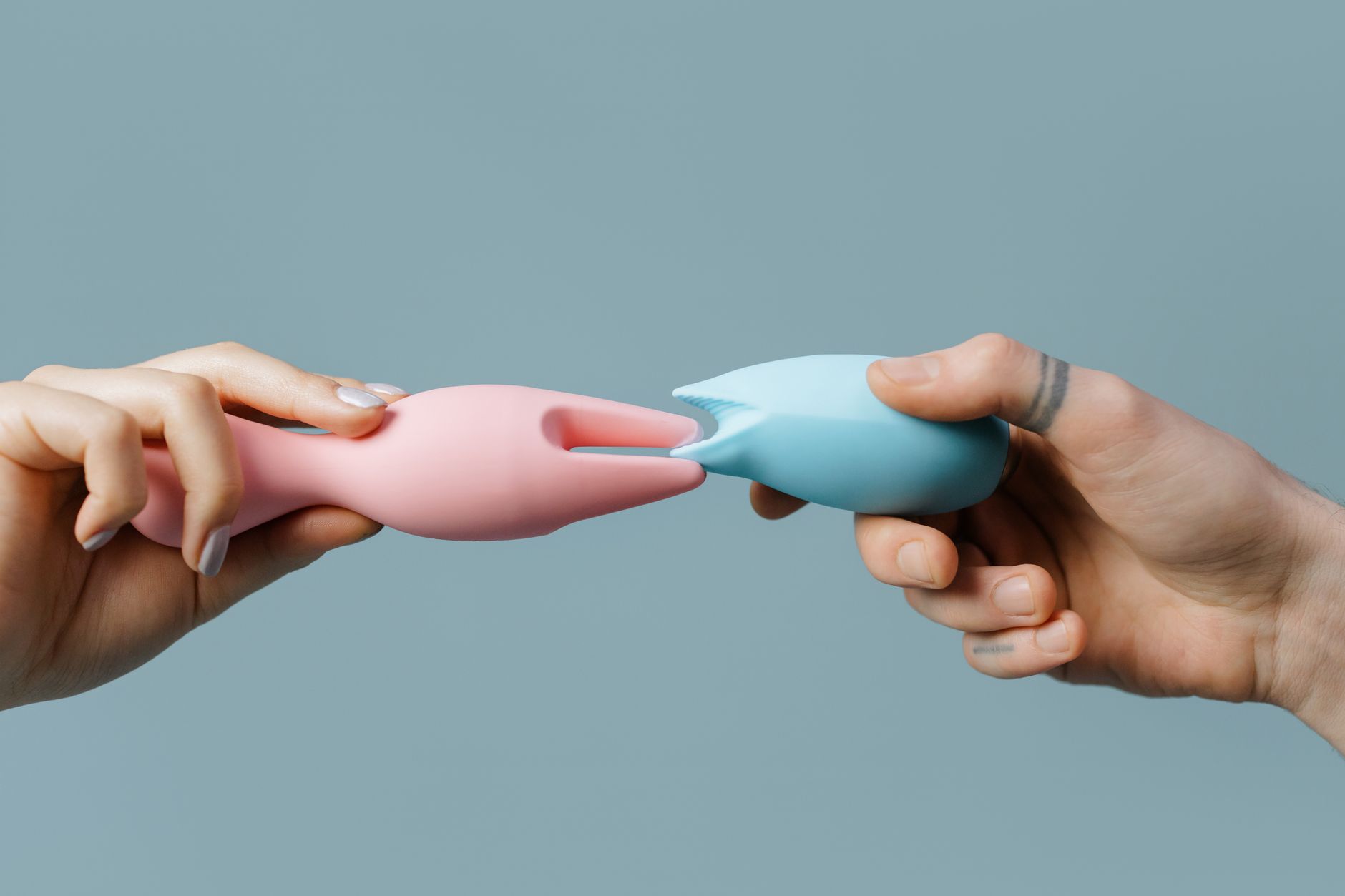
Photo by cottonbro studio on Pexels
The emotional architecture of using a lemon vibrator together
When both partners are present and engaged, a lemon clitoral vibrator becomes a doorway into vulnerability. That's the real intimacy.
Here's what typically happens when you approach it the right way:
Phase one: Curiosity. Your partner watches you use it. They might feel a little nervous. They might ask questions: "Does it feel good?" "Is it weird?" You're giving them permission to be curious too. That permission is huge.
Phase two: Participation. They want to hold it. They want to see how it feels on you. They're learning your body in a different way. This is often where couples rediscover each other. You're pointing out what feels good. They're paying attention. You matter.
Phase three: Integration. Over time, it stops being "the toy" and starts being part of how you're intimate. Maybe your partner uses it on you sometimes. Maybe you use it while they touch you in other ways. Maybe it helps you reach an orgasm faster, which means you both finish around the same time for once. The tool becomes almost invisible. What's visible is connection.
If you're stuck in phase one after several attempts, it's worth asking why. Is there unspoken resentment? Are you both too tired? Is there a deeper disconnection that a toy won't solve? Those are good questions for a couples therapist, not a vibrator.
What changes when pleasure becomes mutual
One of the most common patterns I see is this: women spend years having sex that doesn't quite work for their body. They've gotten good at faking it or accepting that orgasm just takes a long time. Their partner doesn't know because they've never said it. A lemon vibrator can change that, but only if you use it as a conversation starter.
When you say "I want to try this because I want to feel even better," you're creating a new dynamic. You're saying your pleasure is worth prioritizing. And your partner gets to be part of that. That's deeply connecting for both of you.
The practical setup that shows you care
Small gestures matter because they signal intention:
- Clean your lemon vibrator before using it with a partner. Yes, it takes 30 seconds. Yes, it matters.
- Make sure you're both comfortable. That might mean extra pillows, a specific position, good lighting so you can see each other's faces.
- Have water nearby. Have a towel nearby.
- Put your phone in another room.
- Start with the lowest intensity setting. You're not racing toward anything.
These aren't about the toy. They're about saying "I'm thinking about you. You matter. This matters."
When a toy reveals a bigger problem
Sometimes introducing a lemon vibrator uncovers something that needs attention beyond the bedroom. Maybe your partner feels insecure about the toy. Maybe you realize you don't actually want to be sexual with each other right now. Maybe the disconnection is emotional and can't be fixed by sensation alone.
That's information. It's valuable. A toy that reveals a problem is actually doing its job.
If you're hitting resistance, or if sex itself feels obligatory rather than connecting, that's a signal to pause. Understanding your own relationship dynamic around pleasure and obligation is a separate conversation. Some couples need to rebuild emotional intimacy before physical exploration makes sense.
Building a rhythm that works for both of you
Intimacy isn't a once-a-week event. It's micro-moments. Holding hands. Kissing longer than usual. A text during the day that says "I'm thinking about you." When you add a toy into the mix, you're building on that foundation, not creating it from scratch.
The couples who report the most satisfying sex lives aren't the ones using the fanciest toys. They're the ones checking in regularly. "How are we doing?" "What do you want to try?" "I love when you..." These conversations are the infrastructure.
What deeper connection actually looks like
After years of working with couples, I can tell you what real intimacy looks like when a toy is part of it. You both ask questions. You both say yes sometimes and no other times. You know what makes each other feel good. You laugh when something doesn't work as expected. You're not performing for each other. You're present.
You also notice smaller things: your partner learning exactly how you like it touched. You finishing around the same time sometimes. Staying close afterward instead of rolling to opposite sides. Wanting sex more often because it actually feels good for both of you now.
That doesn't come from the lemon vibrator. It comes from the conversation that came before it. The toy is just evidence that you're both willing to figure it out together.
People also ask
Q: Will introducing a toy make my partner feel inadequate?
It might, at first. That's why the conversation matters. You're not saying "You're not enough." You're saying "I want to feel amazing and I want you to be part of it." There's a difference. Some partners feel insecure because they're worried about being replaced. That's worth naming directly: "This isn't about replacing you. It's about adding something new together."
Q: How often should we use a lemon vibrator if we want deeper connection?
There's no magic frequency. Some couples use it most times they're sexual. Others use it occasionally. The point isn't the toy. It's the conversation and presence. If you're using it and both checking out, it's just a device. If you're using it and staying connected, looking at each other, paying attention, that's intimate regardless of how often it happens.
Q: What if my partner thinks toys are cheating?
That belief usually comes from somewhere. Maybe they grew up with a particular view of sexuality. Maybe they're worried it means you're not satisfied. Listen to that without getting defensive. Sometimes education helps: a lemon clitoral vibrator is a tool for pleasure, not a replacement partner. Sometimes you need a couples therapist to work through it. Both are valid paths.
Q: Can a lemon vibrator fix a broken sex life?
No. A vibrator can help you explore pleasure together. But if the disconnection is emotional, if you're not talking, if there's anger or resentment, a toy won't solve that. It might actually highlight the problem. That's not the toy's fault. That's useful information.
Q: What if I want to use it but my partner isn't interested?
You have options. You can use it on your own, which is completely valid. You can keep talking about it without pressure. You can accept that your partner might never want to. You can also recognize that if sexual desires are fundamentally misaligned, that's something couples therapy can help with. Not all mismatches get resolved. Some do. It's worth trying.
Q: How do I know if we're using a toy for the right reasons?
Ask yourself: am I using this to connect with my partner or to avoid connecting? Am I curious or am I desperate? Are we both saying yes or is one person going along? The right reasons involve consent, curiosity, and genuine interest in your partner's pleasure. If you're using a toy to fix a broken relationship or to coerce a partner into sex they don't want, that's not connection. That's using a tool to avoid real conversation.
Moving forward
Introducing a lemon vibrator into your sexual life with a partner isn't about the device. It's about saying "I want us to figure this out together." It's about paying attention. It's about believing that your partner's pleasure matters and that your own matters too.
Start with the conversation. Let the device be secondary. If you're both willing to explore what feels good, what connects, what surprises you, you're already on the path to deeper intimacy. A lemon clitoral vibrator from Helo Nancy's Slem is just the tool you use once you've both decided to try.
If you're working through specific friction points in your sexual relationship, there are resources here. Start with understanding how lemon vibrators work when foreplay feels rushed or explore how to navigate when partners have different comfort levels with toys.
The intimacy you're looking for isn't hiding in a device. It's hiding in the conversation you haven't had yet. Have it. Everything else follows.