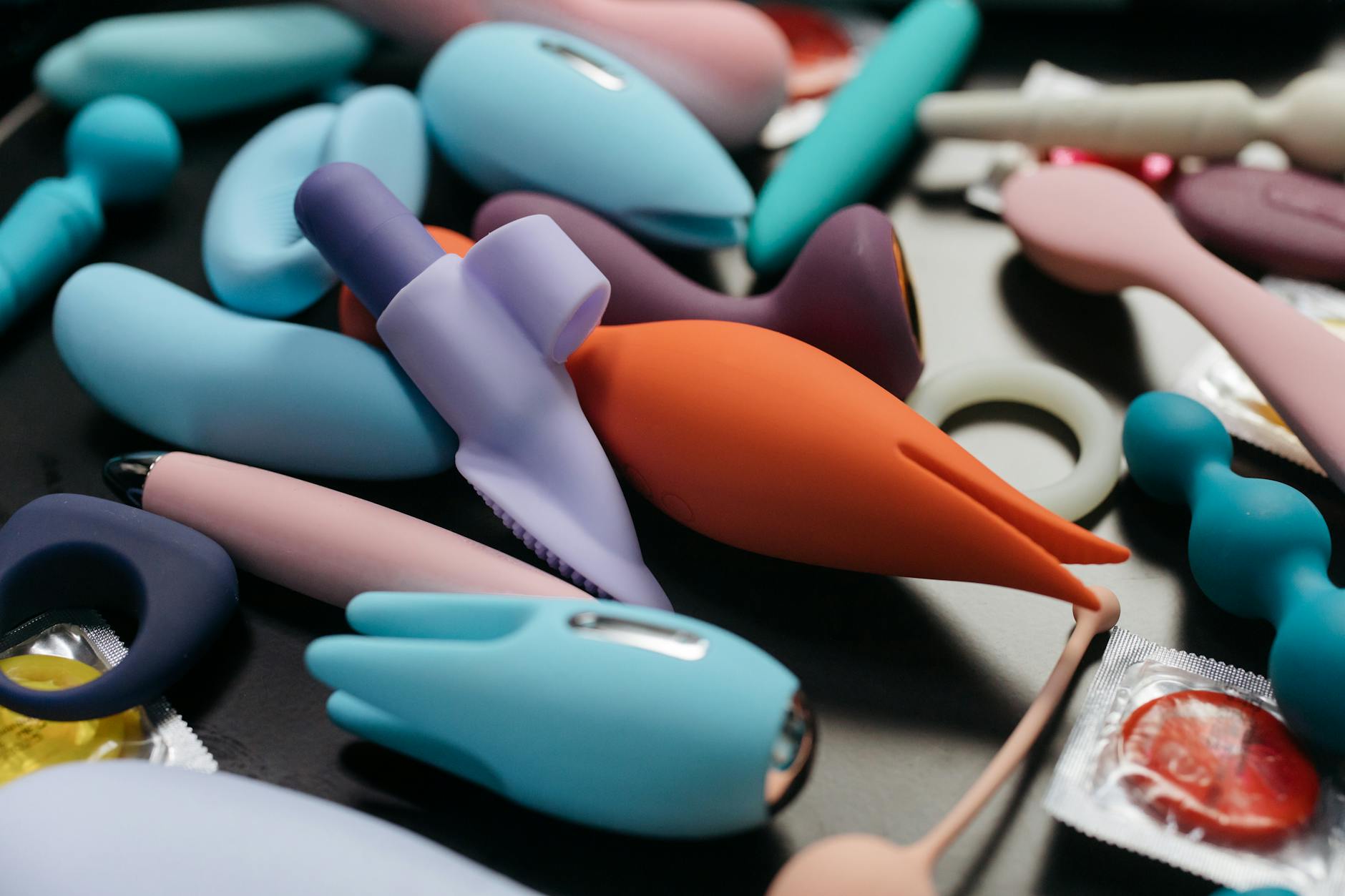
Let's name what's actually happening
Your partner thinks toys mean they're not enough. That's the thing they won't say out loud, but it's sitting there between you both like an uninvited guest. And here's what's true: they're wrong, but their fear is real. Those are two different things, and treating them like they're the same is why this conversation keeps going nowhere.
I see this in my practice constantly. One partner wants to introduce a lemon vibrator, a clitoral sucker, or any toy really. The other partner hears it as a referendum on their adequacy. Then both people dig in. One feels ashamed for wanting pleasure. The other feels rejected. Nobody wins.
The good news? This is one of the easiest relationship friction points to resolve, because it's almost always a communication problem wearing a sexuality problem's clothes.
Why your partner is actually scared (it's not what you think)
When someone feels threatened by vibrators or toys, they're usually operating from one of three beliefs. Name the right one, and the whole dynamic shifts.
Belief One: "A toy means I'm failing." This person has absorbed the message that good sex requires their hands, their body, their effort to be enough. When a toy enters the picture, they interpret it as evidence they've fallen short. They often won't say this directly. Instead they'll say things like "I don't need help" or "What's wrong with what we already do?" What they mean is "I'm scared I'm not good enough."
Belief Two: "Toys mean you're fantasizing about someone else." This person worries that if you're using a vibrator, especially a lemon clitoral vibrator, you're replacing them in your head with someone more attractive, more skilled, or just different. They worry about who you're thinking about when the toy is involved.
Belief Three: "Toys mean our sex life is broken." This person thinks that if the current setup was working, toys wouldn't be needed. So introducing a toy feels like admitting defeat, like saying "what we have isn't good enough."
Here's what's actually true in all three cases: they're confusing a tool with a verdict on your relationship. A lemon vibrator isn't a judge. It's equipment.
The conversation that actually works
Don't start with the toy. Start with desire.
Pick a calm, clothed moment. Not after sex. Not during sex. Not in the middle of an argument. Say something like: "I want to talk about something that matters to me, and I don't want you to think this is about you being inadequate. I'm telling you this because I trust you."
Then be specific about what you want. Not "I want to use a vibrator." Instead: "My body responds in a really specific way that I've figured out on my own. When my clitoris gets a certain kind of stimulation, I can orgasm in ways I can't otherwise. It's like I've discovered a new gear my body has. I want to share that with you. I don't want to do this alone anymore."
That's a very different sentence. That's not "you're not enough." That's "I want to include you in something I've discovered about myself."
Your partner will probably still feel some discomfort. That's fine. Discomfort is not rejection. Say: "I know this might feel new or weird. I'm not asking you to understand it immediately. I'm asking if you're willing to explore it with me, at your own pace."
Then stop talking. Let them sit with it. They might need a few days.
What changes when they agree to try
This is where a lemon clitoral vibrator becomes genuinely useful as a relationship tool, not just a pleasure tool.
When your partner finally agrees to be present while you use a toy, or better yet, to participate, something important happens. They see that you're not disappearing into fantasy. You're more present, more vocal, more connected to sensation. You're not leaving them. You're actually more available to them.
Here's what I recommend for that first session together:
Start with touching first. Spend 15 minutes on foreplay without the toy. Let your partner warm you up. Let them see and feel your body responding. This is crucial. They need to know that the toy is additive, not replacing.
Introduce the toy while they're touching you too. Have them use the lemon vibrator on you while they're also using their hands, their mouth, their body. Make it collaborative. Not "here, hold this while I do my own thing." But "let's try this together."
Talk during and after. Tell them what feels good. Tell them when you're close to orgasm. Invite them into the experience with language. "This is incredible. You're doing this with me." Not "this toy is doing this." The subject is we.
Make it reciprocal. Ask if they'd like you to touch them while they watch. Or ask what they'd like to try next. Don't make the toy about you getting off while they serve as a spectator. That's literally the opposite of what you're trying to do.
The first time is almost never perfect. It might feel awkward. Your partner might feel weird about holding the vibrator. They might feel disconnected from the experience. That's all normal. What matters is that you tried it together, and you survived it.
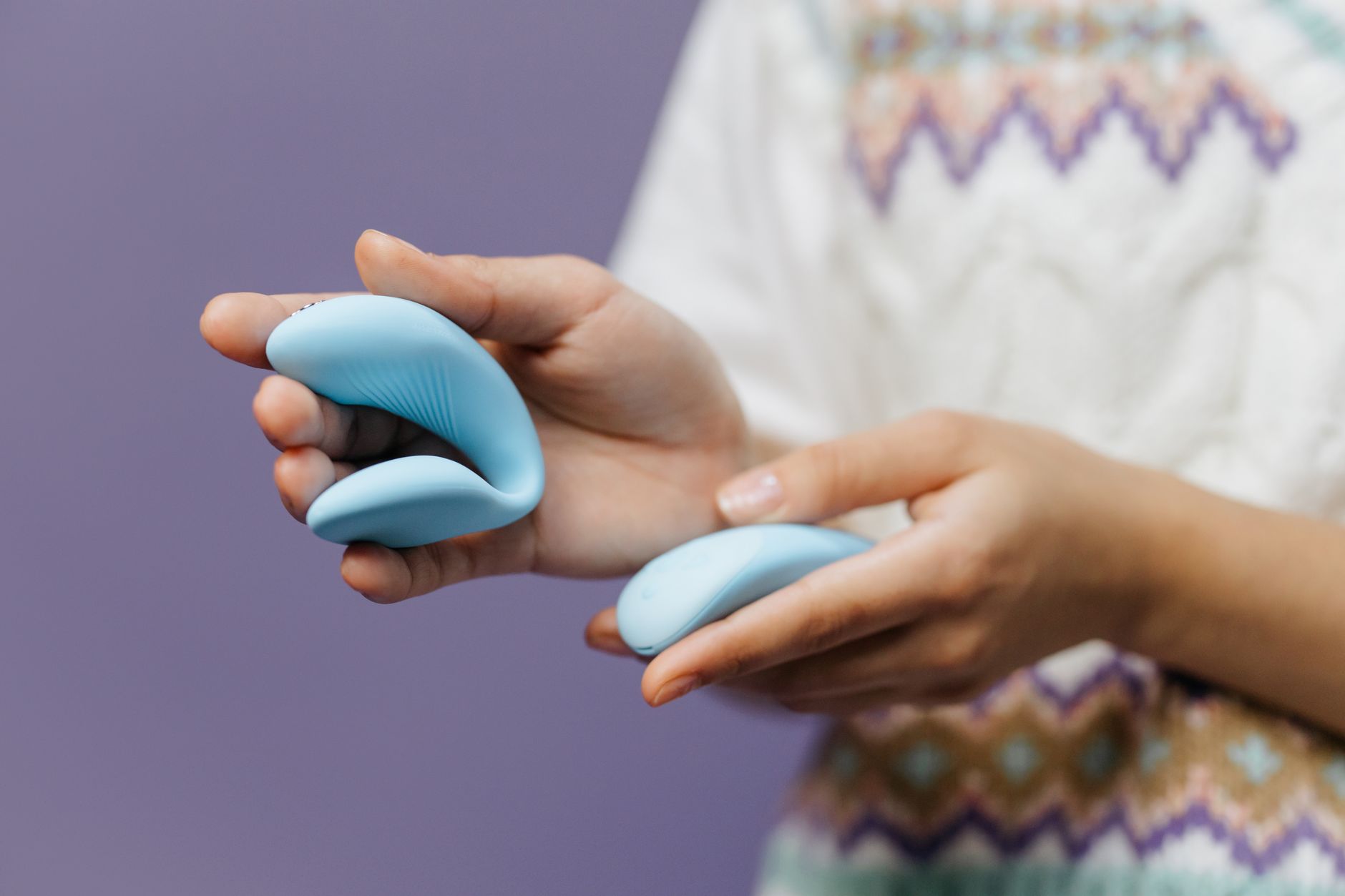
Photo by cottonbro studio on Pexels
The conversation after the first time
Don't let it disappear. Process it together.
Ask your partner what that was like for them. What felt good, what felt strange, what they'd want to do differently next time. Their answer will tell you everything you need to know about whether this is working or if you need to adjust.
If they say something like "I liked seeing you enjoy yourself" or "that was intimate," you're on the right track. If they say "I felt weird" or "I didn't like not being the focus," you have useful information. Maybe the toy comes out less often. Maybe they participate differently. Maybe you need to have another conversation about what intimacy actually means to both of you.
Listen without defending. Your partner sharing discomfort is not a failure. It's data.
When the resistance is actually about something else
Sometimes a partner's objection to a lemon vibrator, a lemon sucker, or any toy isn't really about the toy at all. It's about something deeper.
If your partner is consistently threatened by toys, but they're also threatened by you having friends, taking space, or making your own decisions, this isn't a sex problem. This is a control problem, and a vibrator isn't going to fix it. You might benefit from couples therapy to understand the underlying dynamic.
If your partner is threatened by toys because your sex life has been broken for years and they know it, and they're scared that introducing a toy is an admission that the relationship is over, that's a different conversation. You might be talking about deeper disconnection that a toy can't solve.
But in most cases, a partner's resistance to toys is about that first fear: inadequacy. And that one responds beautifully to honesty, patience, and including them in the experience rather than excluding them.
How a toy actually strengthens the connection
Here's what happens when your partner moves past the threat and gets curious instead.
They learn something new about you. They discover that your body can feel pleasure in ways they didn't know. That knowledge is intimate. They get to give you an experience you can't give yourself. That's actually powerful for them.
You learn something about vulnerability. You let them see you wanting something, needing something, exploring something. That's exposure. That's trust.
You both learn that your sex life can change and evolve and get better, even after years together. That sex isn't a fixed thing. It's something you can keep discovering together.
And here's the part that surprised most of my clients: when your partner sees you come from using a clitoral vibrator, especially when they're involved, they often become more interested in toys, not less. Because watching you experience pleasure that intensely is genuinely hot. Your arousal becomes their arousal. And suddenly the toy doesn't feel like a threat. It feels like a cheat code to getting your partner off, which is objectively appealing.
The practical part: which toy to start with
If your partner is already nervous, don't pick the most intense option. A lemon clitoral vibrator like the ones Helo Nancy's Slem makes is actually a good entry point because the suction sensation feels different from traditional vibration. It's less aggressive. It feels more like touch. Partners often find that less threatening than a standard vibrator.
Start with the lower settings. Let your partner control the intensity at first. Giving them control over the experience can actually make them feel more powerful, not less.
And honestly, pick a color you both like. This is dumb and it matters. If you pick a vibrator in a color your partner finds ugly, they're going to resent seeing it every time you use it. Make it something you both think is nice to look at.
When they come around
Some partners take weeks or months to fully relax into the idea of toys. Some come around after the first experience. Some need to see you use a toy solo first, knowing they're in the next room, before they're ready to participate.
There's no timeline. The goal isn't speed. The goal is honesty and inclusion.
When your partner finally stops seeing the vibrator as a threat and starts seeing it as part of your shared sexuality, something really shifts. You both feel less pressure. Your sex life probably gets more varied. You probably have more orgasms. You probably communicate better about what you want.
And a lot of the time, your partner starts wanting their own toys too. Because once they're not defending against the threat of inadequacy, they can just enjoy pleasure for its own sake.
FAQ: What people actually ask about this
How do I know if my partner will ever accept a vibrator?
If your partner is willing to talk about why they're threatened, there's hope. If they're willing to listen to your perspective, there's hope. If they love you and you frame this as something that brings you together rather than divides you, most partners come around. The ones who don't usually have bigger control or trust issues that exist outside the bedroom.
What if we try it once and my partner hates it?
Then you have data. You know this particular approach doesn't work for them right now. You might revisit it in six months. You might try a different toy or a different context. Or you might decide that for this relationship, partnered toy use isn't on the table, and that's information you needed. The goal is connection, not forcing your partner to be okay with something that genuinely distresses them.
Should I use the toy on my partner, or should they use it on me?
Both is ideal, but start with them using it on you. That puts them in the active role, which many partners find less threatening than being on the receiving end while you hold the control.
What if my partner wants to use the vibrator on themselves after trying it on me?
That's beautiful. That's the whole point. You've opened the door to shared pleasure and self-exploration. Support it enthusiastically.
How often should we use toys if my partner is still uncomfortable?
Less often than you might want. If your partner is still getting comfortable with the idea, don't use toys every time you have sex. Maybe once or twice a month. Let the novelty wear off and the nervousness settle before increasing frequency. Once they're genuinely relaxed about it, you can use toys more often.
What if my partner wants to use the toy but never wants to involve their own body?
That's a boundary you both set. Some partners like to be the operator of the toy but stay clothed and separate. Some like to be in contact with you. These are all valid approaches. Ask what feels comfortable and work from there.
Is it weird if using a toy together actually improves our connection?
It's not weird. It's actually really common. Shared vulnerability, communication about desire, witnessing each other's pleasure—these are intimate things. A toy is just the vehicle. The connection is what happens around it.
The thing nobody says out loud
Most relationships that include toys are happier and have better sex. That's not because the toy is magic. It's because the conversation required to introduce a toy forces you to talk about desire, pleasure, what you actually want, and what you're scared of. That conversation alone is worth it.
Your partner doesn't think toys are threatening because toys are objectively scary. They think toys are threatening because they're scared of something deeper. That might be fear of inadequacy, fear of losing you, fear of their own desires, or fear that the relationship has changed in ways they didn't choose.
A toy can't fix any of that. But the conversation, the honesty, the willingness to explore together—that can. And often it does.
Start with the conversation. The toy comes later. But start now.