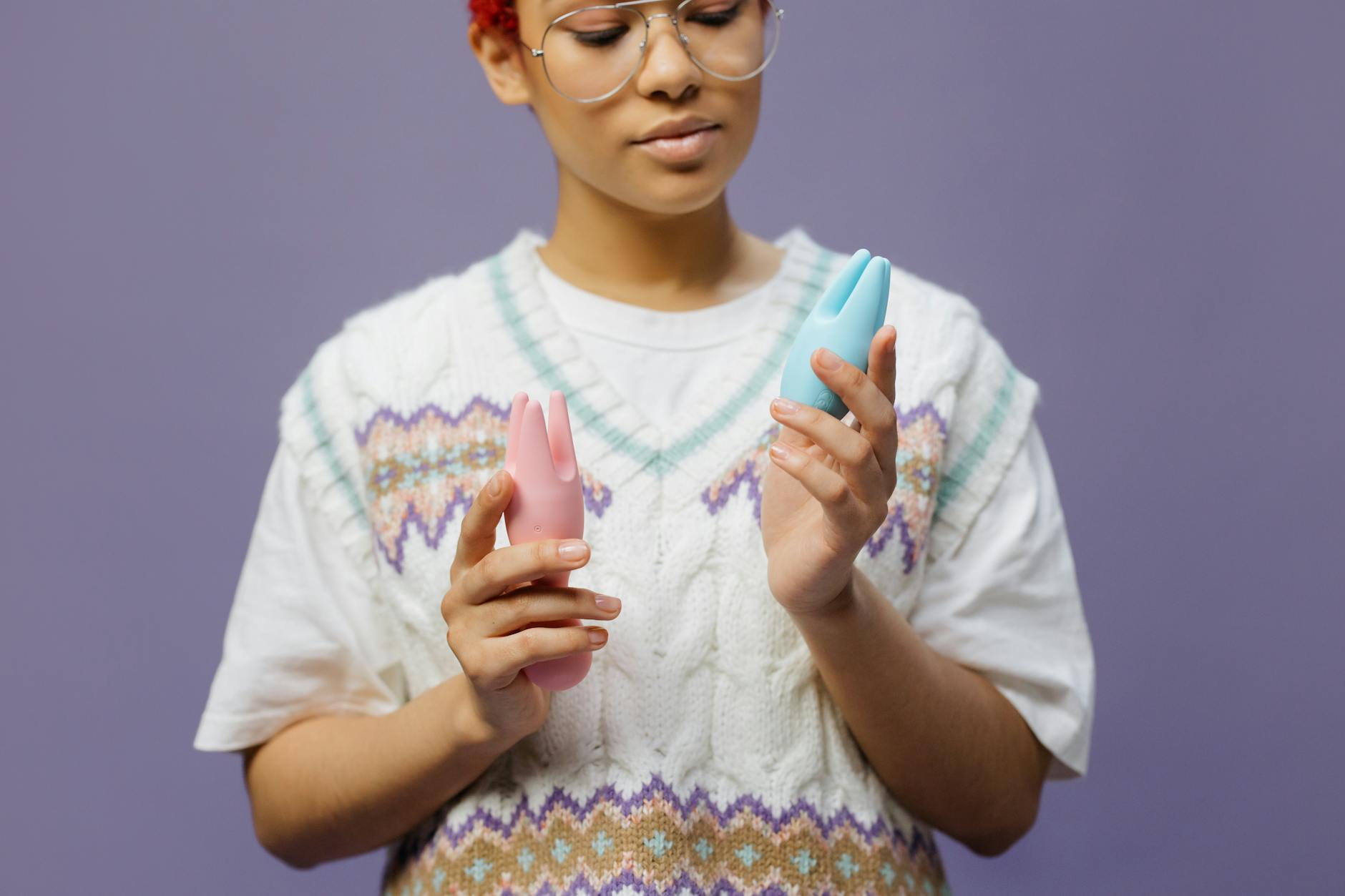
The counterintuitive SSRI plot twist
Here's the thing nobody tells you: some antidepressants flatten sexual response. Others do the opposite. While most people on SSRIs report delayed orgasms or muted sensation, a smaller but real portion experience heightened clitoral sensitivity that feels almost shocking compared to their baseline. It's not a side effect you'll find clearly labeled on the leaflet. Your doctor probably didn't mention it. And if you're experiencing it, you might be wondering whether this is a good thing, a problem, or both.
It can be all three at once. Let me explain what's happening, why a lemon sucker like the Lem works beautifully in this specific scenario, and how to navigate heightened sensation so it feels like a gift instead of an electric shock.
Why SSRIs sometimes amp up, not dampen, sensation
The dominant narrative around antidepressants is sexual dysfunction. And that's real for most people. But the biology is more complicated than a simple on-off switch. SSRIs work by increasing serotonin availability in your brain. Serotonin affects mood, yes. It also affects arousal thresholds and sensory perception. For some people, more serotonin means a calmer nervous system, which paradoxically allows peripheral sensation to register more clearly. You're less anxious about what's happening, so you feel it more acutely.
This is especially true if you started SSRIs while managing significant anxiety or depression. Before medication, your nervous system was in a state of constant vigilance. Pain signals, pleasure signals, everything was filtered through a fog of hyperarousal. Once that background noise quiets down, the good sensations suddenly come through in high definition.
Another factor: SSRIs can increase blood flow to the clitoris in some people, particularly in the first 4-8 weeks of starting the medication. Increased blood flow means increased nerve firing. More stimulation arrives at your brain per unit of touch. It feels intense, sometimes uncomfortably so.
What heightened sensation actually feels like
People describe it in different ways. Some say it's like their clitoris went from a volume 5 to a volume 8 almost overnight. Others describe it as almost painful sensitivity. Direct touch that used to feel nice now feels sharp or overwhelming. You might find that you need to move away from direct stimulation faster than before because it escalates too quickly. Or you might enjoy the intensity but worry that something is wrong.
Nothing is wrong. Your nervous system is simply processing sensation differently. This is usually a temporary phase. Many people stabilize after the first month or two on their medication. Some experience the heightened sensation as a permanent shift, which most eventually find enjoyable once they adjust their technique.
How lemon vibrators solve this specific problem
This is where tools like the Lem come in. Unlike direct clitoral vibrators, which apply constant rhythmic stimulation to the most sensitive tissue, air-suction devices like a lemon clitoral vibrator work through gentle suctioning. The stimulation feels intense in a completely different way. Instead of point pressure, you're experiencing a slow, rhythmic drawing sensation that builds pleasure without the sharp spike.
When your sensitivity is ramped up, direct vibration can feel like touching a live wire. Suction distributes that sensation across a wider area and allows you to control the intensity by adjusting which intensity setting you use. The Lem, for example, has multiple settings that let you start at a much gentler level than most traditional vibrators. You're not choosing between "too intense" and "off". You have nuance.
Another advantage: suction-based lemon adult toys feel less like vibration and more like a partner's mouth or hand, which many people find psychologically comforting when they're navigating an unfamiliar body sensation. The experience feels more intimate and less clinical, which can help your brain relax into the sensation rather than tense against it.
The adjustment window: what to expect
If you've recently started SSRIs and noticed heightened clitoral sensation, you're probably in the first 6-12 weeks of this phase. Here's a realistic timeline:
Weeks 1-4: Maximum sensitivity. Direct stimulation might feel overwhelming. This is when trying a lemon sucker for the first time makes the most sense. The gentler approach feels revelatory.
Weeks 4-8: Sensitivity usually plateaus or starts to ease slightly as your body acclimates to the medication. Some people find that they can tolerate more direct stimulation. Others still prefer suction-based tools.
Weeks 8 and beyond: Most people reach a new baseline. For some, heightened sensation persists but feels less jarring because you've learned to work with it. For others, sensitivity gradually returns closer to pre-medication levels, though usually not identically.
This timeline varies wildly. Your body is not following a script. If you're three months in and sensation is still peaked, that's normal. If it's been six months and you're still adjusting, also normal.
Building a technique that works for heightened sensitivity
Let's talk practical. You have a lemon vibrator. You're exploring it for the first time while your clitoris is basically screaming. Here's how to approach it:
Start with the lowest setting. Not as a default, as a principle. If the Lem has seven intensity levels, begin at level one or two. Let your body register what this feels like before you decide it's "not enough". Heightened sensitivity means low stimulus goes further than it used to.
Use longer warm-up time than you think you need. Fifteen to twenty minutes of foreplay or solo touching with your hands before introducing the vibrator. This gives your nervous system time to gradually climb rather than spike. Your arousal curve is steeper than usual, so you'll reach peak sensation faster than before. Building gradually helps you ride that curve instead of getting thrown off it.
Experiment with positioning. With the Lem or similar lemon clitoral vibrators, try angling it so it's not making direct contact with the clitoral head but rather the surrounding tissue or the mons pubis. Slight lateral pressure rather than head-on contact often feels better when sensation is heightened. You're still getting stimulation, but it's diffused.
Limit duration. If you're used to twenty or thirty minute sessions, cut that down to ten or fifteen while you're adjusting. Heightened sensation can become fatiguing or even painful if you maintain it too long. Better to have a shorter session that feels amazing than a longer one that leaves you sore.
Pay attention to what makes you tense. Heightened sensation often triggers a protective response where your body tenses to defend against overstimulation. The moment you feel that happen, pause. Let sensation settle. Then continue at a lower level. This trains your nervous system to stay open instead of bracing.
When to check in with your prescriber
Heightened clitoral sensitivity after starting SSRIs is usually benign and temporary. But there are situations where you should mention it to the doctor or psychiatrist who prescribed your medication.
If the sensation is painful or burning rather than intense but pleasurable. If it's accompanied by other new symptoms like numbness elsewhere or unusual discharge. If it's affecting your ability to wear clothes comfortably or sit without irritation. These might indicate something else entirely, and it's worth ruling out.
If heightened sensation persists beyond three months with no sign of settling, or if it's severely limiting your quality of life. Your prescriber might adjust dosage or try a different SSRI. Some SSRIs are less likely to cause heightened sensation than others.
In most cases, though, this is your nervous system recalibrating. Give it time. Use tools like the Lem that honor heightened sensitivity instead of fighting it. And know that many people eventually find this phase a gift. The clarity of sensation, once your brain adjusts, can feel like rediscovering pleasure.
FAQ: Heightened sensitivity and SSRIs
Why do some SSRIs increase sensation while others decrease it?
Different SSRIs have different receptor profiles and affect blood flow slightly differently. Sertraline and paroxetine, for example, are more commonly associated with sexual side effects like reduced sensation. Fluoxetine and escitalopram have more mixed reports, with some people experiencing heightened early sensitivity. Your individual brain chemistry also matters hugely. There's no way to predict exactly how your body will respond without trying it.
Does heightened clitoral sensitivity mean the SSRI is working?
Not necessarily. Sexual side effects, whether blunted or heightened, are separate from the antidepressant's effectiveness for mood. You could experience intense clitoral sensation and still have depression. You could have perfect mood response and zero sexual changes. Don't use sensation as a marker of whether your medication is doing its job on the mood front.
Can I use a regular vibrator, or do I really need a lemon clitoral vibrator?
You can try a regular vibrator, absolutely. But if you're dealing with heightened sensitivity, air-suction devices like lemon vibrators tend to feel significantly more comfortable because the stimulation is gentler and more diffuse. A traditional vibrator applies very localized pressure, which can feel overwhelming when your sensitivity is already peaked. That said, some people love intense sensation and want to lean into it. It depends on your preference.
Will heightened sensation go away, or is it permanent?
Most people see sensation normalize within 2-4 months. Some experience it as a permanent shift that they eventually enjoy. A small number find it remains uncomfortably intense long-term, which is when talking to your prescriber about dosage or medication changes makes sense. The good news: it almost always becomes less jarring with time and with the right approach.
Is it safe to use a lemon clitoral vibrator during this time?
Completely safe. Silicone lemon adult toys like the Lem are body-safe and don't introduce any new risk during heightened sensitivity. The suction mechanism is actually gentler on sensitive tissue than traditional vibration. Just follow basic hygiene: clean it before and after use, and avoid using it if you have any active infection or open cuts.
If I experience this heightened sensation, should I tell my partner?
It depends on your relationship and whether you have a partner involved in your sexual life. If you do, yes. Partners often interpret changes in sensation or desire as rejection or loss of attraction. Explaining that this is a medication-related temporary shift, and that you're experimenting with different approaches, prevents misunderstanding. If you're exploring solo with a lemon vibrator for the first time, you don't need to report back to anyone. Your pleasure is your own.
The path forward
Heightened clitoral sensitivity after starting SSRIs is disorienting because it contradicts everything you've been told about antidepressants and sex. But it's real, it's workable, and it's often temporary. Tools like lemon vibrators that prioritize gentleness over intensity give you agency while your nervous system adjusts. Be patient with yourself. Experiment without pressure. And reach out to your doctor if something feels genuinely wrong rather than just unfamiliar.
In the meantime, you're not broken. Your body is learning how to feel good in a new way. That's actually worth celebrating.
For more on navigating medication changes and pleasure, read about rebuilding intimacy after emotional disconnection, or explore how sensation returns after stress-induced numbness.