
The thing nobody says out loud
Libido mismatch is not a sign that you're incompatible. It's a sign that you're human. One partner typically wants sex more often than the other, and when that gap is wide, it creates tension that can feel impossible to name without someone feeling rejected or pressured. Here's what I've learned after years of working with couples: the problem isn't the difference itself. The problem is trying to fix it by forcing the person with lower desire to want more, or asking the partner with higher desire to want less. Both approaches fail.
There's a third path. It involves meeting your partner halfway without abandoning your own pleasure.
Why the desire gap happens (and why it's not your fault)
Libido isn't a constant. It fluctuates based on stress, sleep, hormones, relationship satisfaction, depression, medication, and a dozen other factors. When one partner's libido shifts downward, the gap widens. The partner with lower desire often feels guilty. The partner with higher desire often feels rejected. Both are right, and both are stuck.
What makes this worse: our culture treats high libido as the default and low libido as something broken that needs fixing. It doesn't. Sometimes lower desire is a signal that something's off emotionally or physically. Sometimes it's just how that person's neurology is wired. Sometimes it's both.
The guilt cycle prevents honest conversation. So does the shame cycle on the other side.
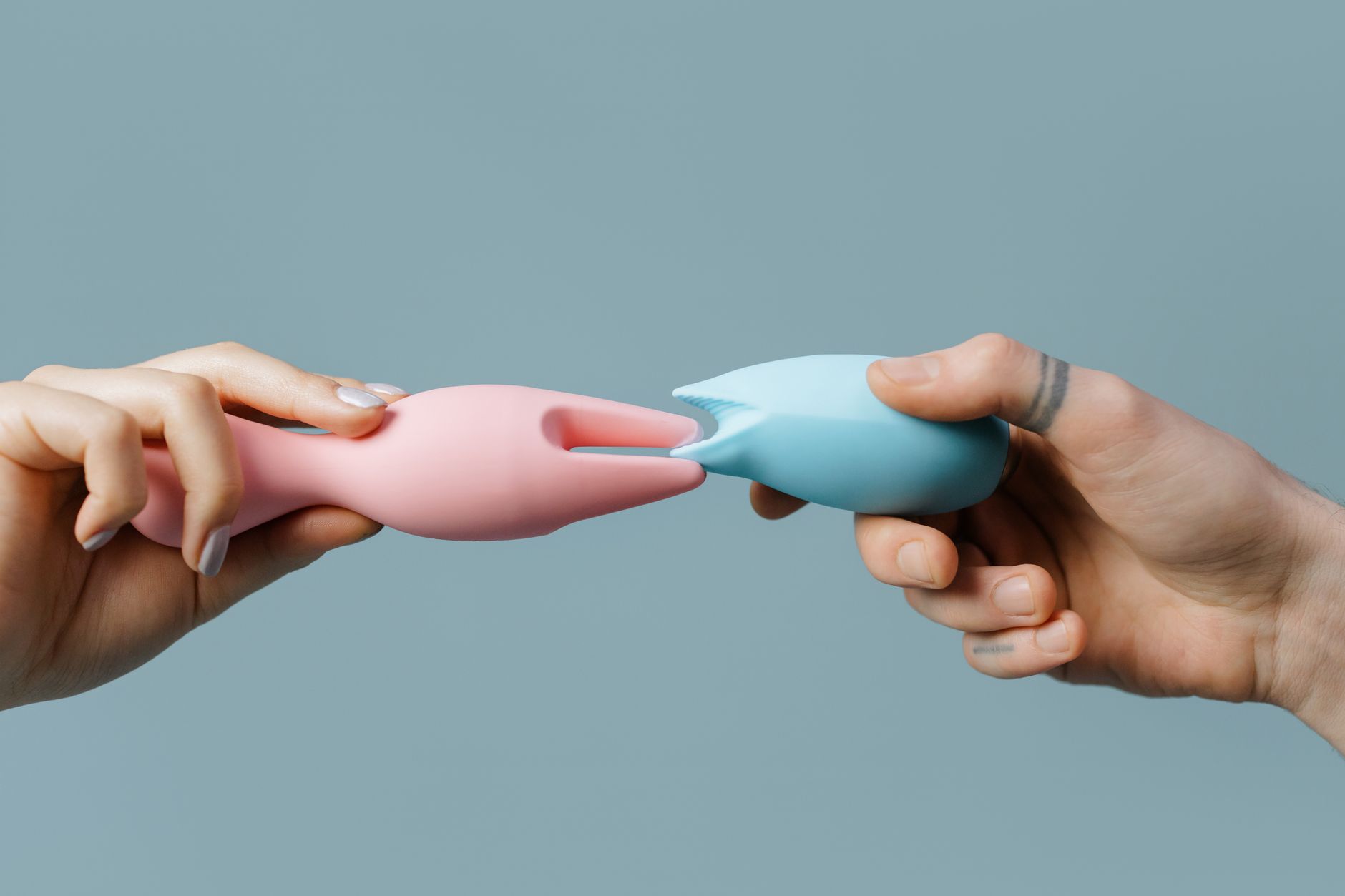
Photo by cottonbro studio on Pexels
How a lemon vibrator changes the equation
A lemon clitoral vibrator does something specific: it removes the pressure to perform at someone else's pace. When arousal takes time to build (which it often does when desire is lower), the vibrator means you're not asking your partner to slow down and wait. You're not asking yourself to fake responsiveness. You're meeting your own body where it actually is.
This matters because one of the most common reasons desire tanks in long-term relationships is exactly this: repeated experiences of being rushed, pressured, or not aroused enough when your partner is ready. Over time, anticipation of that pressure becomes its own desire killer. You start dreading sex instead of looking forward to it.
Using a lem vibrator (or any clitoral vibrator) before partnered sex changes that. You get to warm up on your own timeline. By the time your partner is involved, you're already in your body instead of performing entry into someone else's. That shift is huge.
The practical setup: three ways to use it
First: solo warm-up before partnered sex. Spend 10-15 minutes with the lemon sucker before your partner comes to bed. Get yourself aroused, get your tissues lubricated, get out of your head. By the time they arrive, you're already halfway there. This removes the pressure to go from zero to sixty on their timeline.
Second: use it during partnered sex. This is less intuitive for people with lower libido, but it's often the most powerful move. Instead of trying to match your partner's arousal trajectory, use the vibrator to track your own. You control the intensity. You control the timing. Your partner can be inside you or next to you, and you're managing your own pleasure. This paradoxically makes sex feel more connected, not less, because you're not performing.
Third: use it as a bridge when desire is genuinely absent that day. Some days you're not in the mood and your partner is. A lemon vibrator (especially one with patterns and intensity variations like the Lem) lets you have intimate time together without forcing yourself into arousal you don't feel. You can be present, you can be touched, you can help your partner have pleasure, and you can experience some of your own without it feeling obligatory.
The conversation that needs to happen first
Introducing a vibrator into partnered sex when there's already a desire mismatch can feel risky. Your partner might worry it means you want them less. They might feel inadequate. They might think you're choosing the toy over them.
None of those fears are wrong to have. But they need to be named directly. Here's what I recommend saying: "I want to feel more present when we have sex, and I think using a vibrator might help me get there. This isn't about you being not enough. It's about me being able to enjoy what we're doing instead of feeling rushed or pressured. I want this with you, not instead of you."
That distinction matters. You're not replacing them. You're making room for yourself.
The partner with higher libido often finds that when their partner is actually present and aroused (even if that arousal is aided by a lemon adult toy), the whole experience is better. Guilt-driven sex where one person is performing is worse for everyone. Genuine pleasure from both partners, even if it requires tools, is what actually builds connection.
What changes when you actually use it
Three things I see happen in couples counseling:
Resentment softens. When sex stops feeling like a thing one partner does to appease the other and starts feeling like something they both enjoy, the everyday friction decreases. Your partner stops feeling rejected. You stop feeling pressured.
Desire sometimes increases. This is counterintuitive but real. When the pressure to perform drops and pleasure becomes the actual goal, libido often bounces back. Not always. But often. People want more of what feels good and less of what feels obligatory.
Intimacy gets reframed. Instead of sex being the measure of connection, intimacy becomes about mutual pleasure and presence. That opens up conversations about what else might be tanking your partner's arousal too. Maybe they're stressed. Maybe they need you to help with something. Maybe there's resentment you didn't know was there. Once you're not fighting about the frequency, you can actually talk.
When to bring in professional help
If the desire gap is paired with anger, stonewalling, contempt, or defensiveness, a vibrator won't fix what's actually broken. Those are signs of deeper relationship issues that need a couples therapist. The vibrator is a tool for couples who care about each other and are trying to bridge a real mismatch, not for couples who are fundamentally disconnected.
If your lower libido is tied to depression, medication side effects, or trauma, address that first with a professional. A lem vibrator can help, but it's not a substitute for actual treatment.
And if your partner uses the introduction of a vibrator as an excuse to push for more sex, or if they refuse to respect your boundaries around frequency even with a tool in place, that's also a sign that the issue isn't really about desire. It's about respect.
The logistics (because comfort matters)
Few practical things that help: use water-based lubricant with any silicone vibrator. Have the lemon clitoral vibrator charged and accessible. Talk about patterns and intensity settings beforehand so there's no awkward negotiation mid-act. Consider starting with solo use so you're not figuring it out with an audience.
And honestly, give it three to five times before deciding if it's working. Most people feel awkward the first time. That's normal.
FAQ: Libido, vibrators, and relationships
Can using a lemon vibrator make my partner think I don't want them anymore?
Not if you frame it right. The conversation is "I want to be more present with you," not "I want to replace you." Most partners who initially worry about this feel relieved once they experience how much better partnered sex is when the lower-libido partner is actually aroused instead of performing.
What if my partner refuses to use a vibrator during sex?
That's a conversation about boundaries and respect. You have the right to use a lemon adult toy on your own body. If your partner refuses to be present for that because of their own insecurity, that's something to explore with a therapist. A vibrator shouldn't be controversial in a relationship built on mutual care.
Will using a vibrator make it harder for me to orgasm without one?
No. The research here is clear: using vibrators doesn't create dependency. If anything, learning what intensity and rhythm works for you makes partnered sex better because you know what you need.
How often should we use a vibrator if we're trying to close a desire gap?
As often as feels natural. There's no magic frequency. The goal is making sex feel good for both of you, not hitting a target number of times per week.
What if the desire gap isn't about arousal but about my partner wanting more emotional intimacy first?
Then a lemon vibrator won't fix it. That requires actual emotional work: more conversation, more time together, more vulnerability. But sometimes closing the physical intimacy gap helps people feel safer being emotionally intimate. They're often connected.
Can a clitoral vibrator work if I take antidepressants that lower my libido?
Yes. The lemon sucker can help bypass some of the numbness that SSRIs create. It's not a perfect fix, but many people find that the intensity and pattern variation help them reach arousal and orgasm even when medication is dampening response. Talk to your doctor if the side effects are severe.
Here's the truth
Libido mismatch is solvable when both partners actually want to solve it. It requires honesty about what you need, respect for what your partner needs, and willingness to try something different. A lemon clitoral vibrator is a tool that helps bridge that gap by removing the pressure and shame that typically makes mismatched desire worse.
It won't fix a broken relationship. It won't create desire where there's resentment. But for couples who care about each other and are stuck in a cycle of rejection and pressure, it often helps. Because pleasure that feels good beats obligation every single time.