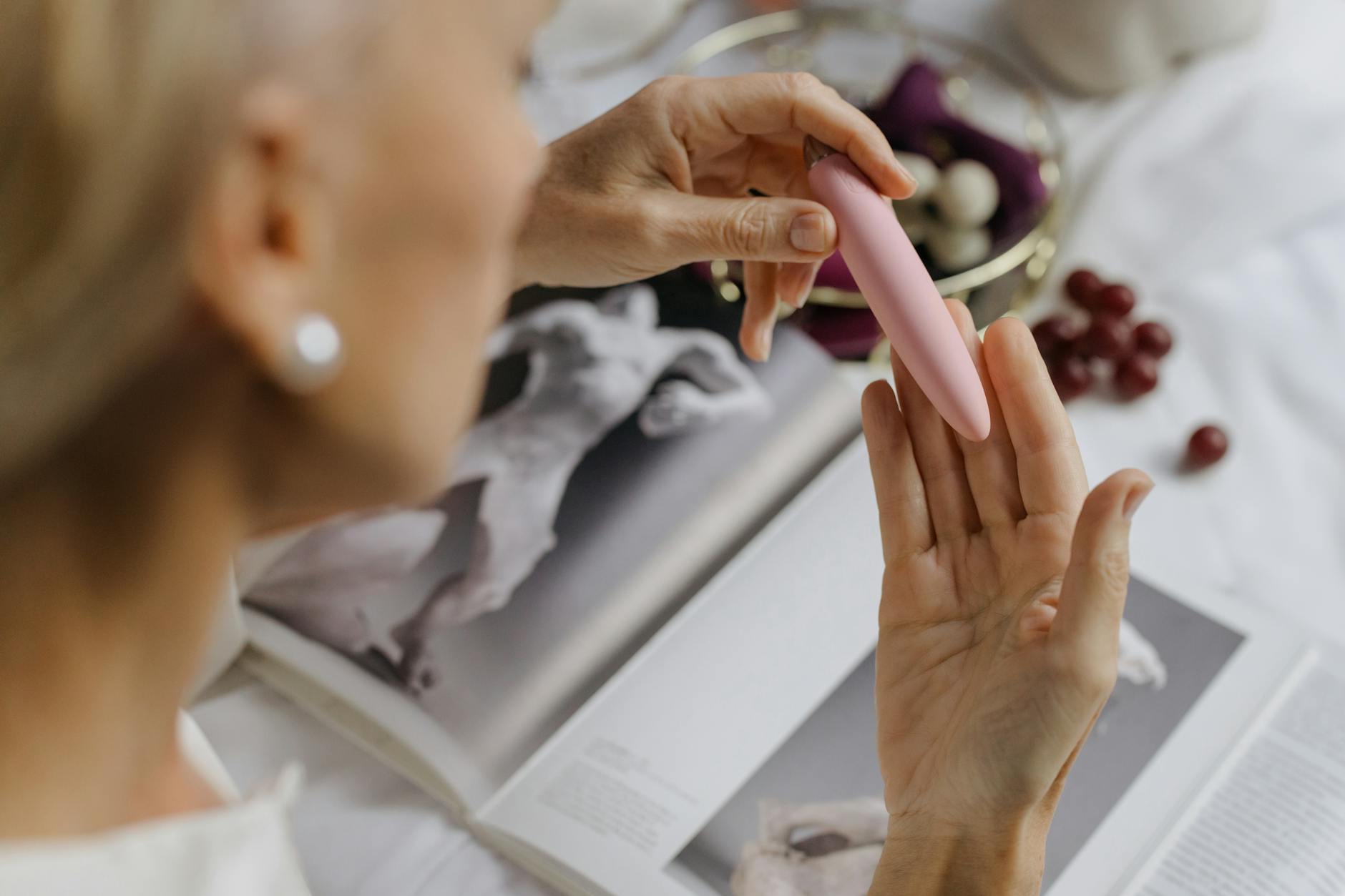
Let's talk about the part no one preps you for
Every postpartum guide tells you about bleeding, sleep deprivation, and hormone crashes. Almost none mention that your vulva is going to feel radically unfamiliar, or that reclaiming pleasure is a legitimate part of recovery. It is.
The physical reality is this: childbirth changes tissue, nerve sensation, and pelvic floor function. It does not destroy your capacity for pleasure. But the path back requires patience, information, and often, the right tools. A lemon clitoral vibrator is one of the smartest choices for postpartum bodies because of how gently it stimulates and how precisely you can control intensity.
What childbirth actually does to sensation
Birth stretches tissue dramatically. Depending on whether you had a vaginal delivery, episiotomy, or cesarean, the healing timeline and sensation changes vary widely. But there are common patterns.
Vaginal tissue thins temporarily as estrogen dips during breastfeeding (lower than menopause, actually). Nerve endings can feel temporarily dulled from stretching or, paradoxically, hypersensitive if there's scar tissue forming. The pelvic floor is profoundly exhausted. Many people report that their clitoris feels numb, or that it's relocated slightly due to swelling.
Here's the good news: this is temporary. By six months postpartum, most of these changes begin to reverse. By a year, tissue usually recovers its baseline thickness and sensation. The timeline varies wildly depending on your body, tearing severity, and whether you breastfeed.
But you don't have to wait until everything feels "normal" to explore pleasure again. You just need to know the rules.
The timeline that actually works
Most OBGYNs clear you for penetrative sex at six weeks. But clitoral stimulation is a completely different animal.
If you had a straightforward vaginal delivery without tearing, you can usually begin gentle external stimulation around week three to four. If you had an episiotomy or significant tearing, wait until week six minimum, and ideally get your provider's green light. Cesarean delivery means six weeks before anything external, simply because your core and pelvic floor need that time to begin stabilizing.
The first time you try anything postpartum, your body is going to surprise you. The sensitivity will feel different. Maybe sharper. Maybe duller. This is completely normal and it changes weekly during the first few months.
Why a lemon vibrator is particularly good for this phase
Air-suction stimulation, like the kind a lemon clitoral vibrator provides, has specific advantages postpartum.
Unlike traditional vibrators, which use direct friction, suction cups gently stimulate without requiring pressure on still-healing tissue. You control the intensity from pattern one (barely perceptible) upward, which means you can match what your recovering body actually wants instead of adjusting yourself to the toy.
The suction creates a seal over the clitoris, which can feel reassuring and grounding for people whose sensation feels scattered or numb. It also tends to trigger orgasm more quickly because of how concentrated the stimulation is, which is genuinely helpful when you're exhausted and have maybe twenty minutes before the baby wakes up.
Most importantly, lemon vibrators are nonporous, fully submersible, and easy to clean with soap and water. When you're recovering from birth, infection risk matters. You need tools you can sterilize completely.
How to actually use it postpartum
Start with external clitoral stimulation only. Don't go internal. Your pelvic floor is healing and doesn't need any pressure inside right now.
Begin with the lowest pattern. Seriously. Your sensitivity is heightened and your arousal capacity might be lower than prepregnancy due to hormones and exhaustion. Pattern one of a lemon vibrator is genuinely subtle. Use it there until you feel ready to shift.
Position matters. Lying on your back with knees bent is safest because you can control pressure and you're not bearing weight on your healing pelvic floor. A side-lying position works too if lying flat feels uncomfortable.
Use water-based lubricant, even if you think you don't need it. Postpartum tissue is thinner and drier, especially if you're breastfeeding. Lubrication isn't optional. It's protective.
Keep sessions short. Five to ten minutes. Your nervous system is in recovery mode and overstimulation can feel dysregulating. You're not trying to have an epic orgasm. You're trying to reconnect with sensation in a way that feels gentle and grounded.
What to expect emotionally
Your brain is also recovering. Postpartum hormones tank, which can genuinely flatten desire. Oxytocin is flowing toward the baby, not toward your own pleasure. Sleep deprivation murders arousal. And there's often a complex emotional layer: your body just did something monumental and you might feel touched out, disconnected, or resentful.
This is normal. None of it means your pleasure is broken.
Many people find that reintroducing clitoral stimulation is actually grounding during this phase. It's one of the few times your nervous system is regulated and focused on yourself. It can feel like an anchor back to your own body after months of it being someone else's.
If you have a partner, separate the conversation about your recovery from the conversation about partnered sex. "My body is changing and I'm learning what feels good again" is different from "I want us to be intimate." Conflating them turns both into frustration.
Red flags that mean you pause
Pain during clitoral stimulation. Not awkward sensation or unfamiliar feeling. Actual pain. That suggests tissue isn't ready and you should wait longer.
Increased bleeding or discharge that's heavier than your normal lochia. Stimulation shouldn't change your bleeding. If it does, your body's telling you it's not ready.
Pelvic pressure or heaviness during or after. That's your pelvic floor saying it's fatigued. Rest it.
Any infection signs. Fever, unusual odor, severe pain, heavy purulent discharge. Stop everything and see your provider.
These aren't reasons to panic. They're just signals to pause and give your body more time.
The role of pelvic floor work
You probably heard about Kegels. Postpartum, pelvic floor work is more nuanced than just clenching.
Your pelvic floor is exhausted. It needs lengthening and releasing as much as it needs strengthening. Try this: lie down, breathe in, and on the exhale, try to relax your pelvic floor completely. It's the opposite of a Kegel and it's usually harder.
You can do gentle pelvic floor physical therapy starting around six weeks postpartum, which can dramatically speed up your recovery and your return to pain-free pleasure. If you had significant tearing or feel ongoing heaviness, this is worth pursuing.
Physical therapy also helps with the sensation integration part. A pelvic floor PT can help you relearn where your pelvic floor is and how to use it consciously, which transforms partnered sex and solo pleasure.
When to reach out for support
If pain persists past three months postpartum, see your OB. If numbness doesn't improve by six months, ask about pelvic floor PT. If you're having intrusive thoughts about your body or sex, postpartum mood disorders are real and treatable. Reach out to your provider or a therapist.
Recovery isn't linear. You might feel great at two months and weird again at four. That's normal. Your body is still integrating massive change.
The bigger picture
Postpartum pleasure isn't a luxury. It's part of integrating back into your own body. When you're a new parent, everything is about the baby, the feeding, the sleep deprivation. Reclaiming even ten minutes of sensation and pleasure for yourself is radical self-care.
A lemon vibrator is a tool that makes that easier. It's gentle enough for still-healing tissue. It's intuitive enough to use when you're exhausted. And it's designed to remind you that your pleasure still exists, even when everything else is demanding your attention.
Your body did something extraordinary. It deserves to feel good again.
People also ask
When can you use a lemon clitoral vibrator after giving birth?
Most providers clear gentle external clitoral stimulation around week four postpartum after an uncomplicated vaginal delivery, or week six after an episiotomy or cesarean. Always confirm with your OB before reintroducing any sexual activity. Your individual healing timeline depends on delivery type, tearing severity, and how your body responds. Some people feel ready sooner. Others need longer. Neither is wrong. The key is listening to your body's signals, not a calendar.
Does postpartum sensation come back to normal?
Yes, usually. Tissue thickens again as hormones stabilize around three to six months postpartum. Sensation typically returns to baseline by six to twelve months. However, some people report permanent changes. Nerve pathways can shift slightly, or sensation might feel subtly different than prepregnancy. This doesn't mean your pleasure is damaged. It means your body has integrated a major experience and adapted. Most people find they're just as capable of orgasm, sometimes more so because they've learned more about what they actually like.
Can you use vibrators if you're breastfeeding?
Yes. Breastfeeding lowers estrogen, which thins tissue temporarily, but it doesn't make vibrator use unsafe. Use lubrication consistently, start with lower intensities, and listen to your body. If sensation feels particularly sensitive or numb, that's the hormonal dip. It reverses when you stop breastfeeding or as hormones restabilize over time. A lemon vibrator's precise intensity control makes it especially good for this phase because you can dial down stimulation to match hormonal reality.
What if postpartum sex is painful even with a lemon vibrator?
Pain isn't normal, even postpartum. It usually signals that tissue needs more time or that there's scar tissue affecting sensation. See your OB to rule out infection, retained tissue, or other complications. Consider pelvic floor physical therapy. A PT can assess whether your pelvic floor is too tight, identify scar tissue, and help you retrain sensation. Many people who have painful postpartum sex feel dramatically better after PT. It's worth pursuing.
Does using a vibrator postpartum affect breastfeeding or milk supply?
No. Clitoral stimulation doesn't affect milk production or quality. Orgasm releases oxytocin, which is also involved in milk letdown, so in theory stimulation might make letdown happen more readily. But it won't reduce supply or harm your baby. If you're worried about timing, you can stimulate after feeding rather than before, but it's not necessary for safety reasons.
How do you talk to your partner about restarting sexual activity postpartum?
Be specific. "I'd like to try external stimulation again" is clearer than "I'm ready for sex." Separate your own pleasure from partnered sex. You might want solo time with a lemon vibrator before partnered activity, and that's healthy. Tell your partner what you need: "I want to go slowly," "I need to be on top," "I'd like to use lubrication." If pain happens, pause immediately and don't push through. Your partner's job is to support your recovery, not to resume prepregnancy patterns. If you're feeling pressure to be sexual before you're ready, that's worth addressing directly or with a therapist.
The path forward
Recovery from childbirth is long. It's also an opportunity to learn your body in a new way. A lemon vibrator can be part of that learning. It's gentle enough for healing tissue. It's responsive to what you actually want. And it reminds you, when everything is chaotic and demanding, that your pleasure still belongs to you.