Let's start with what's real
Perimenopause changes how fast your body responds to touch. It doesn't kill your arousal. It just... stretches the timeline. Where you used to get turned on in five minutes, now it takes fifteen or twenty. That's not broken. That's biology.
Most people don't talk about this shift openly, which means you end up thinking something's wrong with you when actually your hormones are just doing what hormones do when estrogen starts fluctuating. Once you know what's happening, you can stop fighting your body and start working with it.
Why arousal actually takes longer in perimenopause
Here's the physiology. Your estrogen levels are bouncing around like a faulty thermostat. Some days they're high, some days they're tanking. This matters because estrogen directly affects blood flow to the genitals, which is what creates that initial rush of sensation and lubrication when you're aroused.
When estrogen is lower, blood takes longer to redirect to the pelvic floor. Your vulva gets less engorged. Your tissues produce less natural lubrication. The clitoris, which is basically a miniature penis with thousands of nerve endings, takes longer to swell and become hypersensitive to touch.
At the same time, your nervous system is running a little hotter. Perimenopause often brings anxiety, night sweats, and cortisol spikes. A jacked-up nervous system literally cannot relax into arousal. You're partially in fight-or-flight mode.
The result? Your body needs more time and often more consistent, focused stimulation to wake up.
What changes, and what doesn't
Your orgasm capacity doesn't disappear. The nerve pathways are still there. The clitoral tissue still works. What changes is the warm-up phase.
Think of it like warming up a car engine in winter. The engine still runs, but it needs a longer idle before you hit the accelerator. That's not a defect. That's how winter engines work.
Many people also report that their orgasms feel slightly different in perimenopause. Sometimes more subtle, sometimes more concentrated in one spot rather than radiating outward. That's the shift in tissue density and hormone levels. Not worse. Different.
Why lemon vibrators (and clitoral suction specifically) help
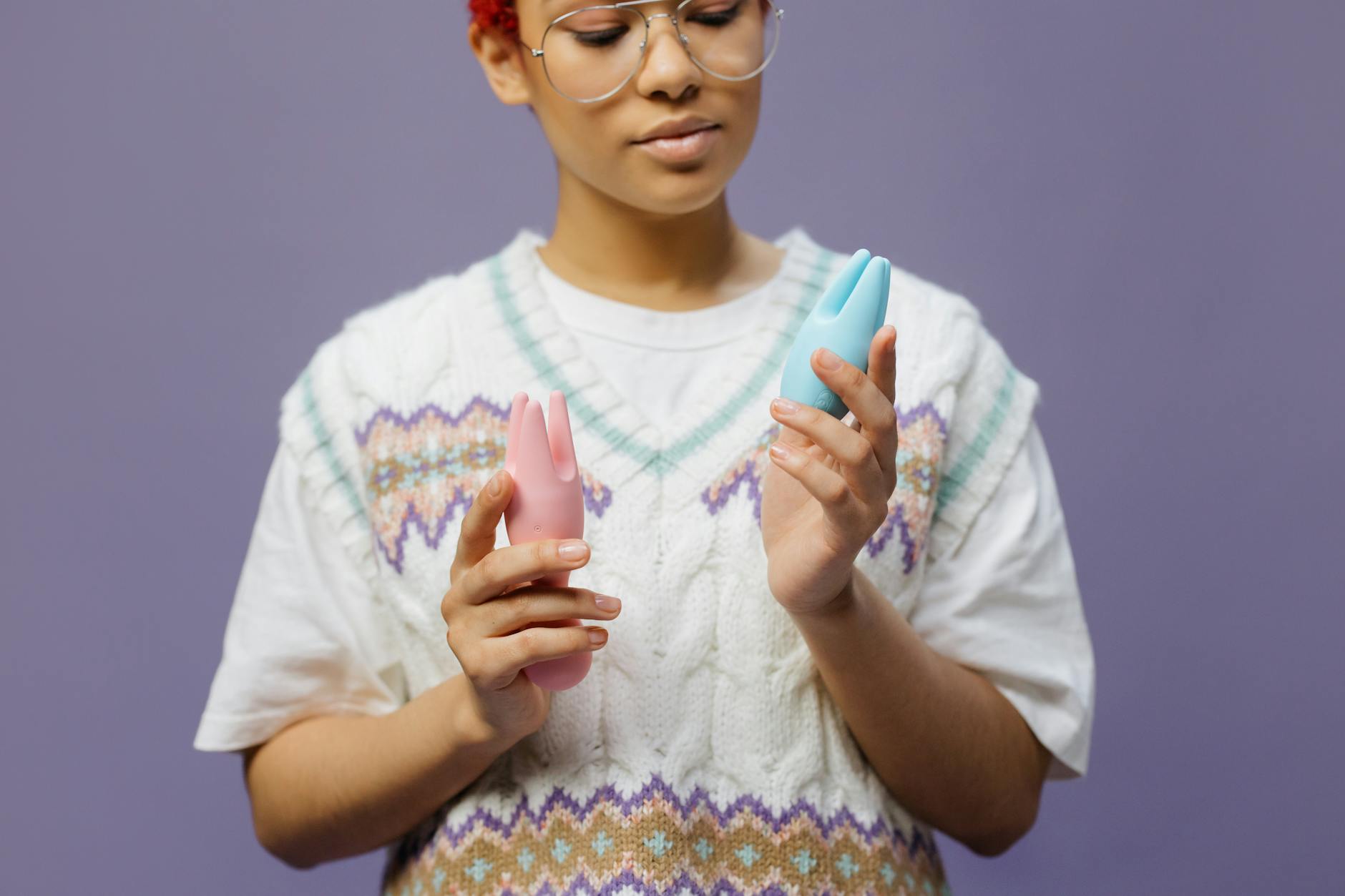
A lemon clitoral vibrator like the Helo Nancy's Slem uses air-pulse technology to stimulate the clitoris without the jarring sensation of direct vibration. This matters enormously in perimenopause.
Here's why it works. The suction mechanism creates a gentle, sustained pressure that mimics the sensation of oral sex. For a body that needs more time to warm up, this is ideal because:
1. It's specific. You're not stimulating your entire vulva. You're isolating the clitoral area, which is what actually creates orgasms. That focus helps your nervous system settle into arousal instead of scattered sensation.
2. It builds gradually. Unlike a vibrator that hits one intensity level, the Lem's suction patterns allow you to start gentle and layer in more intensity as your body responds. You're not shocking your system. You're coaxing it awake.
3. It doesn't require friction. In perimenopause, when tissue is thinner and more sensitive, friction can feel irritating instead of pleasurable. Suction stimulates nerves without the same mechanical pressure.
How to adjust your arousal timeline practically
This is where most people fumble. They think longer arousal means something's broken. Actually, it's an opportunity to redesign your whole experience.
Budget more time. Not forever, just during this phase. If you used to spend five minutes building arousal, aim for fifteen to twenty now. You're not broken. You're not slow. You're shifting gears.
Start lower on the Lem. The settings go from 1 to 8. Begin at 1 or 2, spend a few minutes there, then move to 3. Give your nervous system time to register each level of sensation. Your clitoris will swell gradually, and by the time you reach setting 5, you'll be genuinely aroused.
Use lube, always. Water-based lubricant isn't a sign of aging. It's a tool. The tissue thinning that happens in perimenopause benefits from external lubrication. This isn't weakness. It's smart body care.
Warm up your nervous system first. Take a warm shower or bath before sexual time. Do some stretching. Have a glass of water. Your parasympathetic nervous system (the rest-and-digest one) needs permission to kick in. Temperature, hydration, and gentle movement all help.
What changes in partnered situations
If you're with a partner, this timeline shift often needs conversation. Many partners in long-term relationships have learned your old arousal pattern. Your body used to move fast. Now it needs time. That's not a rejection of them. That's just your new rhythm.
The conversation goes something like: "My body needs more time to warm up now, and I actually prefer it. I want us to slow down together." That's it. Clear, no apology, no shame.
You can also frame it as an invitation. "I'd like us to spend more time on foreplay" sounds like a request for more connection, which it is. Partners generally respond well to that framing.
If your partner was never great at foreplay, perimenopause is actually your permission to ask for it now. You're not being difficult. Your body genuinely needs it.
When to see someone
If arousal takes forever and it's genuinely frustrating you, or if the timeline keeps getting longer month to month, talk to a menopause-trained gynecologist or a sex therapist. Sometimes what feels like a normal perimenopause shift is actually low iron, thyroid issues, or depression. Those are fixable.
Also, if desire has completely tanked alongside the arousal timeline shift, that's worth investigating separately. Desire and arousal are different systems. A longer timeline is normal. No desire at all might need medical input.
The broader shift
Perimenopause often coincides with other life changes. Kids leaving home. Career pivots. Relationship renegotiations. The temptation is to blame everything on hormones. Some of it is hormones. Some of it is life.
But here's what matters: a longer arousal timeline doesn't have to mean less pleasure. It can mean deeper, more intentional pleasure. You're slowing down. You're being more deliberate about what you're choosing. That's not a loss.
Most people who lean into the timeline shift, rather than fighting it, report richer sexual experiences in their forties and fifties than they had in their twenties. The body settles. The mind settles. You know what you like. You take the time to ask for it.
The Lem and other lemon clitoral vibrators help because they meet you where your body actually is, not where it used to be. They work with your new timeline instead of demanding the old one back.
Frequently asked questions
How much longer should arousal take in perimenopause?
There's no single timeline, but a common shift is from five minutes to fifteen or twenty. Some people stretch even further. The key is noticing your own pattern and planning accordingly, not comparing yourself to your past self.
Can a lemon vibrator speed up my arousal in perimenopause?
Not exactly. It can't override your hormones. But it can make the time you spend more efficient and pleasurable. The Lem's suction approach is designed to build arousal gradually, which aligns with how perimenopause bodies actually respond.
Is a longer arousal timeline a sign something's wrong?
No. It's a normal physiological response to fluctuating estrogen. If it's accompanied by zero desire, pain, or depression, those are worth discussing with a doctor. But timeline alone isn't a red flag.
Should I tell my partner about my changed arousal timeline?
Yes. The conversation is simple and direct: "My body needs more time now, and I'm enjoying that." Most long-term partners appreciate the honesty and the invitation to slow down together.
Does this timeline shift go away after menopause?
Sometimes yes, sometimes no. Every person is different. What matters is that you adjust your expectations and tools to match your body right now, not what it used to do.
Can I use the Lem on a longer timeline without getting bored?
Absolutely. The Lem has eight settings and multiple pulse patterns. You can spend your extended warm-up phase exploring different combinations rather than rushing to intensity. That's actually more fun.
The main point
Your arousal timeline in perimenopause isn't broken. It's different. And the sooner you stop treating different as wrong, the sooner you can actually enjoy what's happening in your body. A lemon clitoral vibrator gives you a tool that works with this new rhythm instead of against it.
If you're navigating these shifts and feeling stuck, reach out to our team. We're here to help you figure out what works for your body right now, not what worked ten years ago.