
Let's start with what your partner is actually afraid of
It's rarely about the toy itself. When someone says "I don't want you using that," what they usually mean is: "I'm worried you don't need me anymore" or "This feels like a criticism of what I provide" or "I'm not enough." Those fears are legitimate. They deserve to be heard. And they're also almost entirely disconnected from what a lemon clitoral vibrator actually does.
I've worked with hundreds of couples navigating this exact friction point. The pattern is always the same: one partner introduces a toy (usually out of genuine curiosity or desire for more pleasure), the other partner hears it as rejection, and suddenly you're both trapped in a conversation where neither of you is actually saying what you mean.
Why the intimidation response happens
Your partner's brain is doing something logical, even if it feels irrational to you. They're thinking: "A toy can do something I can't. Therefore I'm being replaced." Biologically, they're also experiencing a threat response. The introduction of a lemon vibrator into your shared intimacy registers as competition. That's not a character flaw. That's how attachment works.
Here's the real kicker: bringing a clitoral vibrator into partnered sex actually has nothing to do with what your partner can or can't do. A lemon sucker works through air-pulse stimulation. Your partner's fingers, tongue, or penis cannot replicate that sensation. This isn't a judgment on their technique. It's just physics. No human can create consistent suction the way a device can.
This distinction matters because it means the toy isn't replacing them. It's adding something new that neither of you could access alone.
The conversation that actually works
Timing first: don't introduce this mid-conflict or during sex. Pick a calm moment over coffee or a walk. You're not asking permission. You're inviting them into your pleasure, which is different.
Here's the opening I recommend: "I want to talk about something that matters to me, and I need you to know this isn't about you. I've been curious about what different types of stimulation feel like, and I want to explore that. I'd love if you were part of it, but I wanted to be honest about what I'm thinking first."
Then pause. Let them react. Don't defend or over-explain right away.
If they say they feel threatened, here's what you say: "I get why this feels scary. But here's the real thing: a lemon vibrator and your touch do completely different things. They're not in competition. I want both. And I especially want you with me while I'm exploring."
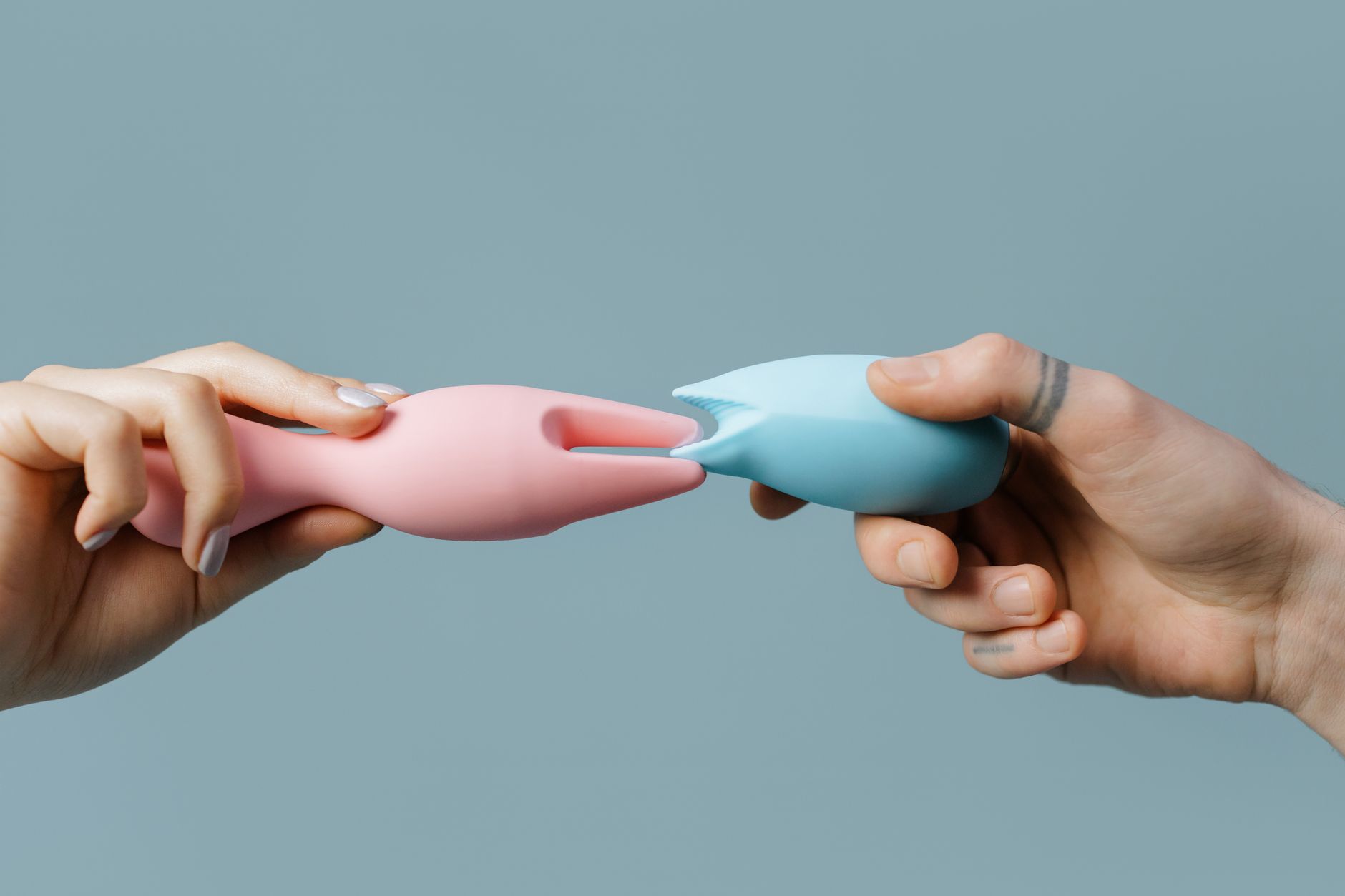
Photo by cottonbro studio on Pexels
Making it collaborative, not isolating
The fastest way to dissolve the intimidation is to make the toy part of your shared experience. This doesn't mean you have to use it together immediately, but the shift from "secret" to "shared" changes the emotional landscape entirely.
Invite them to participate in whatever way feels comfortable. Some partners want to be in the room but not touching. Some want to use the lemon vibrator on you themselves. Some want to use it on you while they're inside you. Some just want to watch and be involved mentally. All of these are collaboration.
The key is saying: "I want you in this. What role feels right for you?" This reframes the toy from a threat to a team project.
You might also try why lemon vibrators work better for clitoral pleasure when direct stimulation feels too intense to help them understand the actual mechanics. When they see it's not a replacement but a different tool entirely, the fear often softens.
The reassurance that sticks (and what doesn't)
Don't say: "It's not about you." That sounds like deflection and it makes them feel worse.
Do say: "I want more pleasure in my life, which includes with you. This tool helps me access something I couldn't before. That means you get to experience a more satisfied version of me."
Don't oversell the toy or act like you've been dying for it. That reads as lying.
Do be honest: "I'm curious about this, and I think it could be fun for us to explore together."
Don't promise it will "fix" your sex life or magically improve things. That's too much pressure on both the tool and the relationship.
Do focus on addition: "I'm adding something, not replacing anything."
When your partner comes around
If they agree to try, go slow. Use the lemon vibrator without them present first. Get comfortable with it yourself so you're not fumbling around trying to figure it out during partnered sex. You'll feel more confident, and they'll feel less like they're watching an experiment.
When you introduce it into your time together, start with lower intensity settings. Let them see what it looks like, hear what it sounds like. Demystification kills a lot of the fear.
Thank them. Actually say: "I appreciate you being open to this. It means a lot that you're willing to explore with me." People need to know their flexibility was noticed and valued.
When they stay resistant
Sometimes a partner won't budge. They might say no toys ever, or specifically no lemon vibrators, or they might say yes but mean no. If you've had the conversation and they're genuinely not moving, you're at a decision point: Can you live with this boundary, or is this a dealbreaker?
That's not a small question. Sexual compatibility matters in long-term relationships. But before you make that call, consider whether the toy is actually the issue or if it's pointing to something bigger. Are they controlling about other things? Do they get threatened easily? Is this about them not wanting you to have pleasure outside their control? That's different from someone who just feels insecure about toys.
If this is a one-off sensitivity that's rooted in insecurity rather than control, the conversation and time usually help. If it's part of a pattern of them dictating what you can and can't do with your own body, that's a different conversation, possibly one worth having with emotional distance and physical connection or with a couples therapist.
A note on the mechanics of actually using it together
If your partner does get curious and wants to try, explain the settings. Let them hold it. Let them test it on their hand or arm so they understand the sensation. This removes mystery and builds comfort. Some partners get wildly into it once they realize it's actually kind of fun to use on someone they care about.
Your pleasure becomes their pleasure once they see you actually enjoying it. That's the real shift that happens.
The deeper thing
All of this is ultimately about communication. The lemon vibrator is just the context. It's a chance to practice saying what you want without guilt, and for your partner to practice hearing desire without hearing rejection. Those skills matter far beyond the bedroom.
People also ask
Why do partners feel threatened by clitoral vibrators?
Partners often worry that toys mean they're not enough, or that you're losing interest in them. This fear is usually rooted in insecurity rather than reality. A lemon clitoral vibrator provides a type of stimulation that human touch cannot replicate, so it's not actually replacement. The emotional piece is real though and worth addressing directly.
Can using a lemon vibrator with a partner actually improve intimacy?
Yes. When both partners are on board and curious, introducing a toy can open conversations about pleasure, create novelty in the relationship, and give you both something to explore together. The collaboration itself often strengthens connection because you're being vulnerable and curious with each other.
What if my partner says no to toys permanently?
You'll need to decide if that's a boundary you can respect or if sexual satisfaction without additional tools matters enough to reconsider the relationship. If they're controlling rather than just cautious, that might point to a bigger issue worth exploring with a therapist.
How do I use a lemon vibrator during sex with my partner?
Start by introducing it outside of sex so they're comfortable with it. Then, during partnered time, you can use it on yourself while they're touching you elsewhere, or they can use it on you. Communicate about pressure, speed, and whether it feels good. Treat it like you would any new technique.
Does using a lemon sucker mean my partner isn't satisfying me?
No. A lemon vibrator provides air-pulse stimulation that's physically different from any human touch. It's not better or worse, just different. Your satisfaction with your partner and your curiosity about new sensations are separate things.
How do I bring up toys without making my partner feel rejected?
Be clear that this is about exploration and addition, not criticism. Say something like: "I want to try something new for my own pleasure. I'd love if you were part of it." Focus on what you're adding to your shared experience, not what's missing now.