How to Use a Lemon Vibrator When Desire Feels One-Sided in Your Partnership
When one partner wants more sex than the other, the gap isn't something to apologize for. Here's how a lemon clitoral vibrator can help you both feel less alone.
One of you wants sex three times a week. The other wants it once a month. Or never. Neither of you is broken, and neither of you is wrong. But the gap between those numbers has a way of becoming the entire conversation. The person with higher desire feels rejected. The person with lower desire feels pressured. You're both right, and you're both exhausted.
This is not a communication problem that talking can fix. It's a biochemistry problem wearing a relationship disguise. And the solution is not more conversation about it. The solution is reconfiguring pleasure itself.
A lemon vibrator like the Lem can help because it separates two things that got tangled: your orgasm and your partner's expectations.
Desire differences happen for a dozen reasons. Hormones, medication, trauma history, stress, depression, neurodiversity, attachment style. Sometimes it's circumstantial. Sometimes it's just how you're wired. What matters is this: when you're the person with lower desire, being asked for sex activates a part of your brain that says danger. When you're the person with higher desire, being turned down activates a rejection response. Neither of you chose this. Neither of you can think your way out of it.
Here's what happens next in most couples. The higher-desire partner starts initiating less, which reads to them as a loss of intimacy (which it is). The lower-desire partner feels relief, which reads to the other person as rejection (which it also kind of is). You end up managing each other's emotions around sex instead of having sex. The desire gap doesn't shrink. It grows.
A lemon clitoral vibrator changes the equation because it removes the other person from the equation. Your pleasure becomes yours again. Your body gets to want things without anyone watching. And that sounds selfish until you realize that removing the performance pressure is what actually rebuilds desire.
There's a shame narrative that runs like this: "If you're in a partnership, you should want sex together. Using a vibrator alone is choosing yourself over your partner." This is backwards. The research shows the opposite.
Couples where both partners engage in solo pleasure have higher relationship satisfaction, lower sexual dysfunction, and less resentment. Because solo pleasure is not the absence of partnership. It's the foundation for it. When you're not performing for anyone, your body remembers what it actually likes. You stop confusing obligation with desire. You bring yourself to the relationship instead of bringing your anxiety.
For the higher-desire partner, this is a game-changer. You get pleasure that isn't contingent on your partner's mood. You get to come. Your need stops being a problem they have to solve. You stop feeling resentful about turning someone on. For the lower-desire partner, it takes the pressure off. Nobody is waiting for you. Nobody is disappointed. Your partner isn't watching you fail. You get to explore your own body without an audience.
Then sometimes, from that less-pressured place, partners reconnect. Not because they have to. Because they actually want to.
Don't lead with "You don't want me, so I'm getting a vibrator." That reads like punishment. Lead with curiosity about your own body. "I realized I've been focused on what you want for so long that I don't actually know what I want anymore. I want to explore that." That's true, and it's not about them.
If you're the higher-desire partner bringing this up, frame it as pressure relief. "I think some of my resentment comes from making you the only source of my pleasure. I want to change that." Your partner might feel relieved. They might feel threatened. Both feelings are valid. Give them space to sit with it.
Don't ask permission. You don't need it. But do communicate. "I'm going to start using a vibrator for solo play. I wanted you to know because I don't want you to find out sideways and think I was hiding it." That's an adult conversation. That's a partnership one.
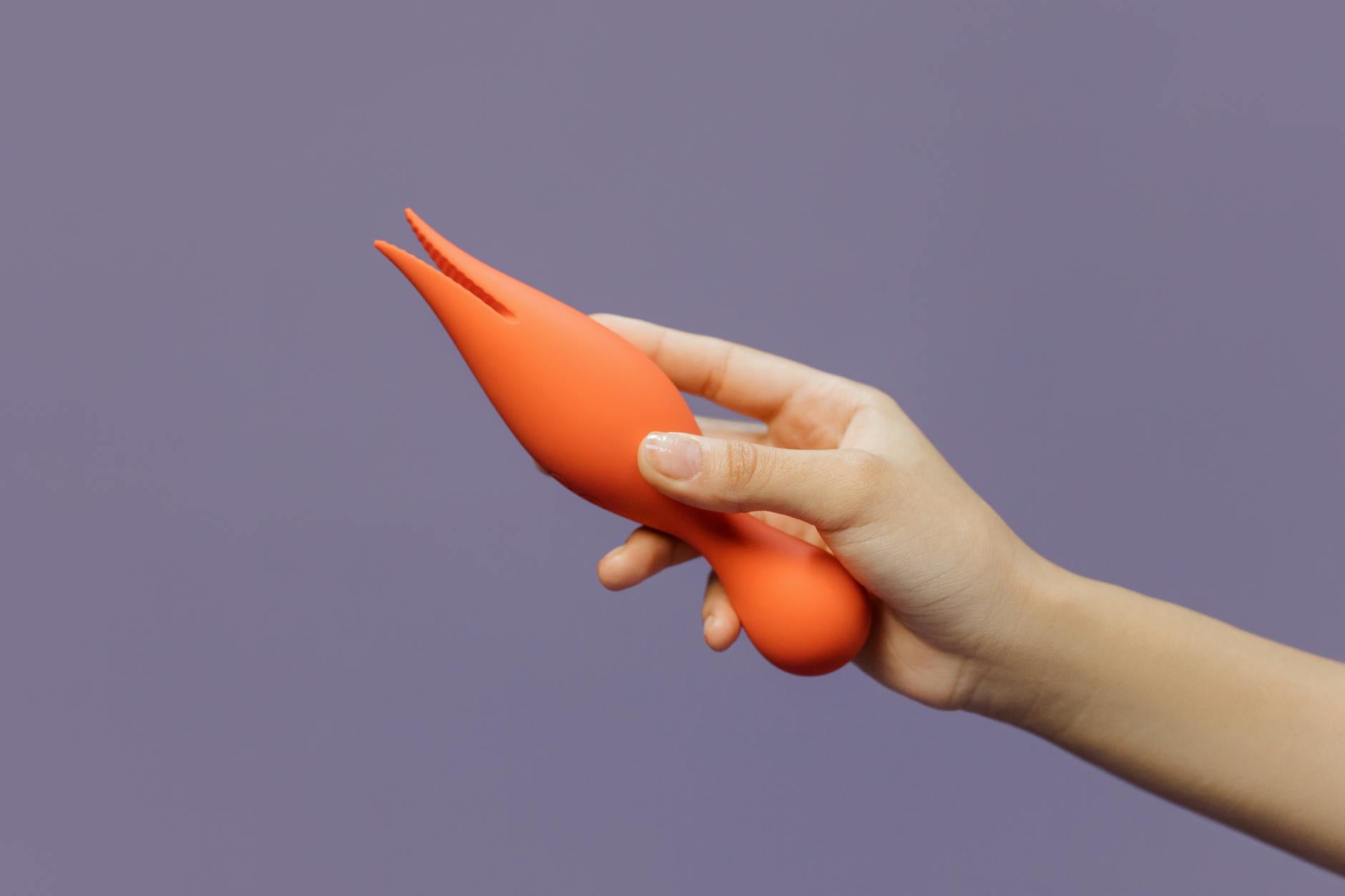
When you're ready, a lemon clitoral vibrator like the Lem works particularly well for this conversation because it's not massive or intimidating. It's elegant. It's the opposite of dramatic. You're not replacing your partner with a machine. You're adding a tool that lets your body be honest.
Let's say you're the person with lower desire. For years you've said no, and every no has carried guilt. You haven't had solo pleasure either, because the whole thing started feeling shameful. A Lem in your nightstand changes the tone. You can explore your body on your timeline. You might discover that you actually like touch more than you thought. You might learn what patterns your body responds to. You might have an orgasm by yourself that reminds you sex can feel good instead of obligatory.
When your partner notices you're less resentful, less defensive, they stop pushing. The pressure lifts. And sometimes, from that lifted place, you want them again. Not because you have to. Because you remembered you could.
If you're the higher-desire partner, you're no longer storing all your sexuality in one person. You're not constantly checking their temperature, reading their face for willingness, managing your own desire so it doesn't make them uncomfortable. A lemon vibrator lets you have a full sexual life that's separate from negotiating your partnership. You come. Regularly. Without asking. Without waiting. That changes how you approach your partner. You're not desperate. You're not resentful. You're actually resourced.
Then when you do come together, it's not because one person is sacrificing. It's because you both showed up wanting it.
First: own your own vibrator. Not a shared one that lives in a drawer you both see. Something that's yours, kept somewhere private. This sounds obvious until you realize how many couples keep toys in places where the lower-desire partner has to look at them and feel judged.
Second: have a rhythm. Not rigid, but intentional. Maybe it's three times a week for you, solo. That's your non-negotiable pleasure time. Your partner knows you're taking it. There's no secrecy, but there's also no invitation. This removes the constant negotiation.
Third: if you want to eventually integrate this into partnered sex, talk about it first. "Sometimes I like to use the Lem during partnered sex. Sometimes I don't. This isn't about you being enough. It's about what my body needs." Some couples find that watching a partner use a vibrator is hot. Some don't. Both are fine. The point is clear communication beforehand.
Fourth: keep the water-based lubricant nearby. Lemon clitoral vibrators work best with lube, which also signals to your body that this is a sensual experience, not just efficient. This matters more than you'd think for rewiring your relationship to pleasure.
If the desire gap is paired with other things that aren't working, a vibrator is a piece, not the whole solution. If there's active resentment, contempt, infidelity, or just profound incompatibility, a vibrator won't fix the relationship. It might help you feel less desperate while you figure out what's really happening. That's still valuable.
Consider seeing a couples therapist who specializes in sexual dynamics. They can help you separate a desire mismatch (totally manageable) from a deeper disconnection (that needs real work). Most desire gaps are fixable once you remove the shame and the pressure. But sometimes they're a symptom of something bigger.
It's not more sex. It's less performance. It's not conversation about why you want different things. It's each of you remembering what pleasure feels like when nobody's watching. It's the higher-desire partner coming into the relationship without desperation. It's the lower-desire partner coming into it without dread.
A lemon vibrator won't solve a broken relationship. But it might heal a relationship where one person stopped liking sex because they were too busy managing the other person's need. It might help a higher-desire partner feel less alone. It might give a lower-desire partner permission to want anything at all.
You deserve pleasure that isn't entangled with guilt or obligation. Your partner deserves not to feel like the only source of your satisfaction. A lemon clitoral vibrator like the Lem gives you both that. And from there, sometimes, you actually want each other again.
No. Cheating involves betraying the terms of your relationship. If you're in a monogamous partnership and you use a vibrator alone, that's not sex with another person. That's not a betrayal unless you've explicitly agreed that solo pleasure is off-limits. Most relationships that ban solo pleasure end up with more resentment, not more connection.
Some partners feel threatened initially because they confuse a vibrator with a replacement. That's worth addressing. But the research is clear: when both partners understand that solo pleasure supports partnered sex, most couples feel closer, not farther apart. Your partner might eventually feel relief that they're not the only source of your orgasms.
Yes, absolutely. Many couples find that using a vibrator during partnered sex takes pressure off the lower-desire partner (they can come without waiting for the right conditions) and lets the higher-desire partner feel less anxious about whether their partner is satisfied. It's not a replacement for connection. It's a tool that makes connection easier when you're mismatched.
There's no "should." Use it as often as it feels good. Some people use it three times a week. Some use it daily. The point isn't frequency. It's giving yourself permission to have pleasure on your own terms, without managing anyone else's expectations.
Maybe. When you take the pressure off and explore your body without performance anxiety, some people find that desire naturally increases. But sometimes low desire is just your baseline, and that's okay too. The goal isn't to want sex more. It's to stop feeling guilty about wanting less.
That's a boundary issue, not a sex issue. You get to have solo pleasure. If your partner is controlling about this, that's worth unpacking, possibly with a therapist. A healthy partnership doesn't require surveillance of your own body.
You don't need permission to know yourself. A lemon vibrator is a tool for that. Use it.
If you're navigating desire mismatch and want support thinking through how to talk about this with your partner, consider reaching out. The gap between you might be smaller than it feels.