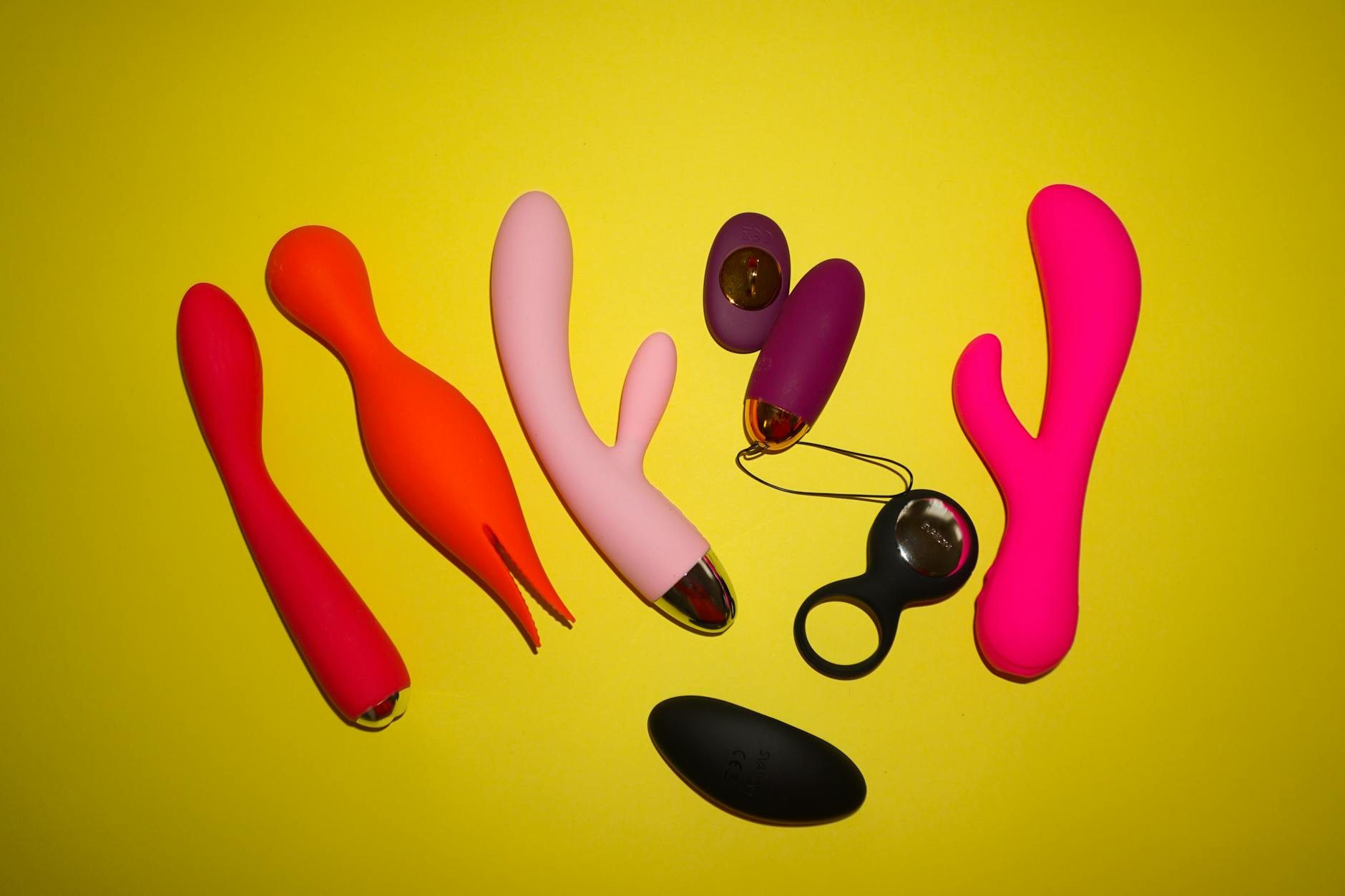
How to Use a Lemon Vibrator When Desire Feels Disconnected From Your Body
Your mind wants it. Your body doesn't respond. Here's why that happens, and how a lemon clitoral vibrator resets the connection between arousal and sensation.
You want to want it. Your partner initiates, or you plan a night for yourself, and mentally you're there. But the moment touch happens, your body flatlines. No warmth building, no tingle, no sense that pleasure is even possible. It's like watching the show of desire from behind bulletproof glass.
This isn't low libido. This isn't broken. This is what happens when the neural pathway between arousal and sensation gets overwritten by stress, relationship strain, disconnection, or the simple cumulative weight of being responsible for everyone but yourself.
Desire disconnect happens in layers. Your brain initiates arousal (you're willing, you're interested, you're trying), but the signal doesn't make it to your clitoris and genitals. The neural highway that usually lights up gets quiet. Physiologically, this looks like reduced blood flow, slower lubrication, and a pelvic floor that's braced instead of relaxed.
Three things typically trigger this:
Stress load. When you're holding chronic tension (work deadlines, family care, relationship conflict), your nervous system stays in a low-level alert. Pleasure requires the opposite state. Your body won't prioritize arousal when it thinks you might need to run.
Relational rupture. If you've been managing resentment, unspoken anger, or feeling unseen by a partner, your body knows before your mind admits it. Intimacy requires a baseline of safety and connection. Without it, sensation shuts down. This isn't punishment. It's protection.
Disconnection from yourself. Some people spend so long calibrating their energy around others that they lose the thread of what their own body actually feels like. You've been a mother, a partner, a caretaker. You've learned to ignore your own signals. Now when you try to focus on sensation, there's static instead of signal.
A lemon clitoral vibrator works differently than traditional vibrators because it uses suction and pulsation instead of direct vibration. That matters for reconnection work because it creates sensation without overwhelming already-sensitized tissue.
When your body has been offline, you don't need intensity. You need signal. The Lem and other lemon sucker vibrators deliver a clear, unmistakable sensation that doesn't require you to "work" for arousal. The stimulation is so direct that your nervous system registers it immediately. This breaks the feedback loop where you're trying to feel something that isn't coming.
It's like the difference between someone yelling at you versus gently touching your arm. Both deliver information, but one cuts through static and the other gets absorbed by it.
Start with exploration, not performance. Schedule 15 minutes alone. Not for orgasm. For information. Your job is to notice what you feel, not to achieve anything. This is fundamentally different from the approach most people take ("I need to come to prove I'm normal").
Use your lemon clitoral vibrator on the lowest setting. Touch it to your inner thigh first, not directly to your clitoris. Your nervous system needs to recognize that touch is coming and that it's safe. Once your thigh registers the sensation, move the vibrator slowly toward your clitoris. You're mapping your own arousal geography.
Notice the texture of sensation. Is it tingling? Warm? A dull ache? Pressure? There's no "right" answer. The point is that you're reconnecting to the capacity to feel. Write it down if that helps. Journaling sensation grounds the experience and gives your brain evidence that your body is responding.
Don't chase the orgasm. This is the hardest instruction and the most important one. If you've been disconnected, your body has likely developed a protective pattern where orgasm is the only "proof" that you're functioning. Release that metric temporarily. The goal right now is sensation, not completion. A 15-minute session where you feel three distinct waves of arousal is a win. An orgasm that comes from gritting your teeth is not.
If the disconnect is rooted in your relationship, a lemon vibrator solves half the problem. It reconnects you to your own sensation. But it doesn't repair the underlying rupture.
Here's what I recommend: have a separate conversation with your partner that isn't about sex. Not "I feel disconnected during intimacy," which puts them on defense. Instead, something like "I've realized I've been running on fumes. I need to rebuild my sense of what I actually want and need. This is going to take some time. It's not about you, and it's not a rejection." You're naming the real issue, which is usually that you've been a passenger in your own life.
Then, actually rebuild it. That might look like solo pleasure reconnection with your lemon clitoral vibrator. It might also look like reclaiming time, saying no to things that deplete you, or moving your body in ways that feel good. Your partner's job is to hold space, not to fix it.
Once you've rebuilt basic sensation and trust with yourself, you can decide what you want to invite your partner into. Sometimes that's partnered touch with your vibrator present. Sometimes it's just letting them know you're ready to try again. Sometimes it's realizing that the disconnection was telling you something important about the relationship.
You'll feel it in small ways first. A moment where your partner touches your neck and you actually register it instead of bracing. A 10-minute solo session where you lose track of time instead of watching the clock. Lubrication that shows up without effort. These are the real markers. Not an orgasm. Not"performing" desire. Just your nervous system gradually lowering the alarm.
Q: How long does it take to rebuild sensation after disconnect?
A: Three to four weeks of consistent exploration, assuming the underlying stress or relational issue is also being addressed. If it's not, you can use the best lemon vibrator available and still feel stuck. The physiology follows the psychology.
Q: Is it normal to feel nothing even with a lemon sucker vibrator?
A: Yes, and it doesn't mean your vibrator is broken or you're irreparably disconnected. It often means you need permission to stop performing and start noticing. Sometimes the first sessions feel like nothing. By week two, most people report clarity. If nothing shifts after four weeks of solo work, consider whether there's an unaddressed relational, medical, or trauma component.
Q: Can I use a lemon clitoral vibrator with my partner while reconnecting?
A: Absolutely, but reframe it. Instead of "let's have sex and also use the toy," try "I want to show you what I'm learning about my own body." You're inviting them into the process, not hiding behind the vibrator. This actually rebuilds intimacy faster than solo work alone.
Q: What if the disconnect is tied to past sexual trauma?
A: A lemon vibrator can be part of reclamation, but you likely need a trauma-informed therapist or somatic practitioner alongside it. Your body has learned to protect itself in ways that a vibrator alone won't reverse. That's not a limitation of the toy. It's a sign that you need professional support alongside it.
Q: Is disconnect the same as low libido?
A: No. Someone with low libido may not think about sex much at all. Someone with desire disconnect thinks about it, wants it mentally, but can't feel it in their body. They're different problems with different solutions. A lemon sexual toy addresses disconnect. Low libido needs a broader conversation about stress, health, hormones, and sometimes medication.
Q: Should I tell my partner I'm using a clitoral vibrator for reconnection work?
A: That's your choice. Some people find that transparency deepens trust. Others find that solo exploration first, then sharing afterward, feels less vulnerable. There's no universal right answer. What matters is that you're not hiding from shame. You're creating space for yourself.
Disconnect between desire and sensation isn't a personal failure. It's usually a signal that something in your life or relationship has stopped working. A lemon clitoral vibrator is a tool that helps you rebuild the physical sensation. But the real work is addressing what created the disconnection in the first place.
Start with the solo exploration. Let your nervous system remember what pleasure feels like. Once you've done that foundational work, you can decide what comes next. That might be bringing your partner back in. It might be deciding you need more space or more honesty. It might be realizing that reconnecting to your body also means reconnecting to your own needs.
Your pleasure deserves to be felt, not just performed. A lemon vibrator can help you get there.