
Let's talk about the slowdown
Your body isn't arousing the way it used to. Not because something's wrong with you, but because something has changed. Maybe it's been months since you've felt genuinely turned on. Maybe it takes 20 minutes now instead of five. Maybe you're present in the moment but your body feels like it's operating on a 15-minute delay behind your mind.
Here's the thing: this is not a failure. This is your body telling you it needs something different. And if you're working with a partner, it's almost certainly creating tension because neither of you knows how to calibrate to this new timeline.
Why arousal is taking longer now
There are about five common culprits, and sometimes it's all of them working in concert.
Stress and mental load. Your brain is the largest sexual organ. If it's spinning with work deadlines, family drama, financial worry, or relationship tension, arousal literally can't happen. Your nervous system is in a mild-to-moderate threat state, and it's not going to move into parasympathetic mode (where pleasure lives) just because you want it to.
Hormonal shifts. Whether you're navigating perimenopause, recovering from stopping birth control, or dealing with thyroid changes, hormones directly govern how fast arousal builds. Estrogen influences blood flow to the genitals and tissue sensitivity. Lower estrogen, slower ramp-up. This is physiology, not psychology.
Relationship wear. Long-term partnerships create what I call "pleasure friction." You've fallen into patterns where sex happens at predictable times, initiated the same way, often without genuine novelty or mystery. Your brain stops signaling arousal because there's no signal to send. The routine has flattened the experience.
Medication or health changes. SSRIs, antipsychotics, blood pressure medications, and certain thyroid treatments all slow or blunt arousal. So does untreated sleep deprivation, chronic pain, and low iron. If this is new for you, your health has likely shifted.
Disconnection from your body. You've spent months or years overriding what feels good because you're performing pleasure for someone else, because you're trying to be "quick" about it, or because you learned early on that your pleasure wasn't the priority. Your body stops talking. Rekindling that conversation takes real time.
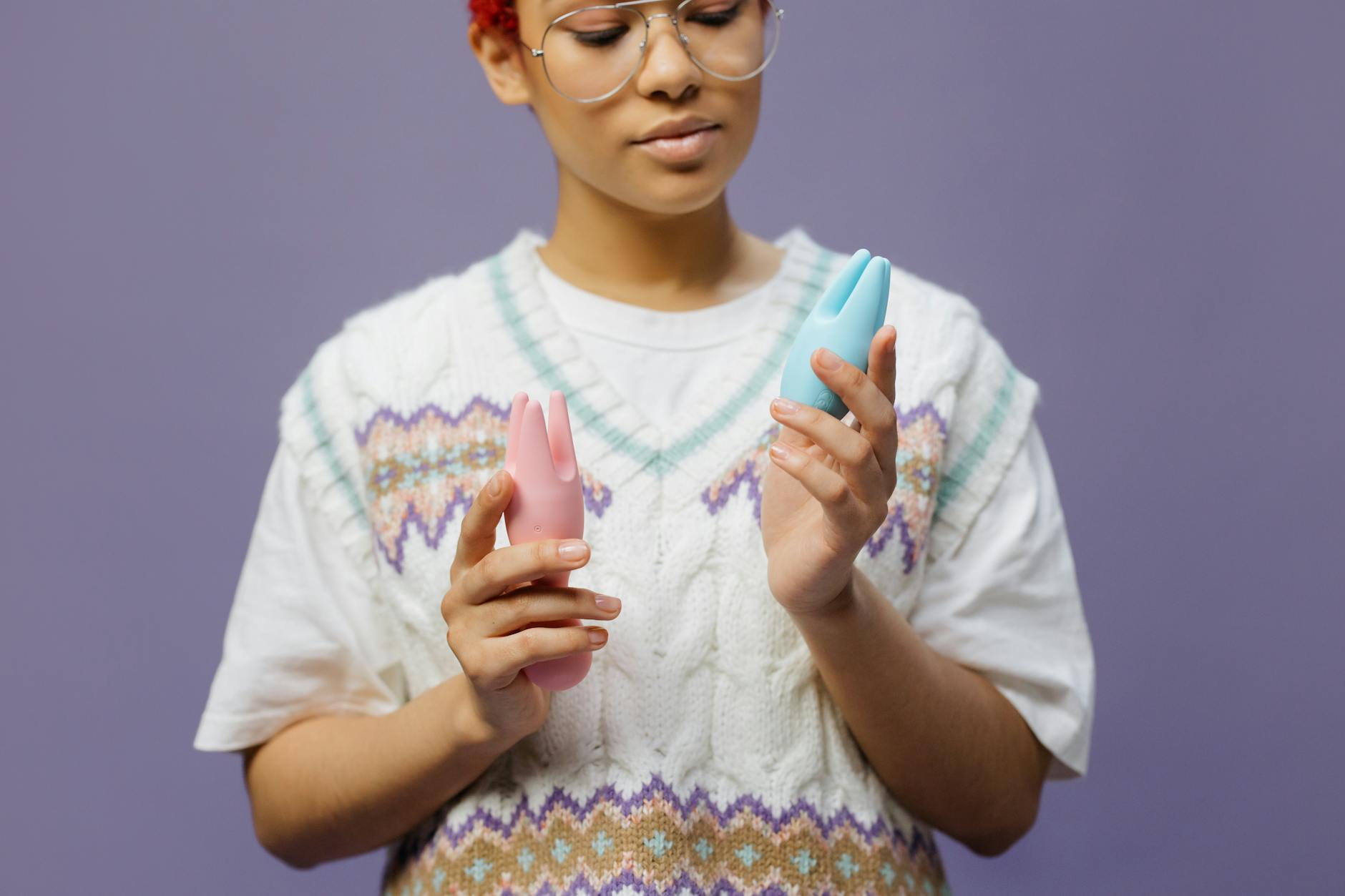
Photo by cottonbro studio on Pexels
The math that actually helps
If arousal used to happen in five minutes and now it takes 25, you don't need to "fix" your body. You need to change your timeline and expectations.
Most people approach slow arousal by trying to speed it up. More direct stimulation. More intense vibration. Faster patterns. None of that works because you're fighting your nervous system instead of supporting it.
Here's what does work: giving yourself the full timeline your body actually needs, then meeting yourself there with exactly the right tool.
A lemon clitoral vibrator like the Lem is purpose-built for this scenario. Unlike wand vibrators that deliver blunt force, or bullet vibes that demand immediate intensity, a lemon sucker uses gentle suction and pulsing patterns that build sensation gradually. You're not forcing arousal. You're coaxing it. There's a crucial difference.
How to structure a session when arousal is slow
Start with buffer time. Decide you're going to spend 30-40 minutes before you touch yourself or your partner touches you. Not because you're obligated to, but because you're giving your nervous system permission to actually settle.
The first 10 minutes are not sexual. Take a shower. Light a candle. Put on music that makes you feel something. Change your clothes into something that feels good against your skin. You're signaling to your body that this is a container where pleasure is allowed. This is foreplay for your nervous system, not your genitals.
Spend 5-10 minutes on non-genital touch. If you're with a partner, this looks like massage, kissing, or just being close without any expectation of "progress." If you're solo, it might be touching your arms, thighs, or breasts. The point is to activate sensation awareness before you bring in a vibrator.
Introduce the lemon vibrator on low patterns (1-3). Start at the outer edges of the vulva, not directly on the clitoris. Suction-based stimulation builds sensation differently than vibration. You're looking for a gentle, almost curious approach. Let your body tell you when it's ready for more direct contact.
Stay there for 5-10 minutes. This feels impossibly slow if you're used to rushing. It's supposed to. Your nervous system is learning that it's safe to be here, that no one is going to jolt it into high gear suddenly, that pleasure isn't a performance metric.
Move to the clitoris when you feel readiness shift. This might be 15 minutes in. It might be 30. When it happens, you'll know because the sensation starts to feel different. Lighter touch becomes more interesting than before. This is arousal building. Now you can increase intensity gradually.
Finish with pattern 4-5 or whatever feels right. Because you've given yourself real runway, most people find that orgasm comes either easily or with a quality they haven't felt in years. You've done the boring work upfront. Now pleasure gets to be easy.
The partner conversation that has to happen
If you're in a relationship, your slowed-down arousal directly affects your partner. They might feel rejected. They might try to speed things up out of anxiety. They might interpret your slow burn as lack of desire for them specifically.
None of these interpretations are true, but they're all understandable. You need to separate the conversations.
Talk to your partner when you're not in a sexual context. Say: "My body is taking longer to warm up right now. This isn't about you or my desire for you. It's about what my nervous system needs. Here's how we can work with it together."
Then show them. Use a lemon vibrator in front of them if you're comfortable. Explain what slow arousal actually feels like from the inside. Let them see that this isn't a problem to solve. It's a timeline to respect.
The best partners adjust. They learn that faster doesn't mean better, and that the quality of an orgasm built over 30 minutes beats the speed of one rushed in five.
What to do if slow arousal is paired with numbness
Sometimes arousal takes forever AND sensation feels muted. You're present but not really feeling much. This is different and needs a different approach. The lemon clitoral vibrator still works, but you're combining it with awareness work. As you use the suction patterns, pay attention to micro-sensations. A slight warming. A tiny shift in pressure. A 2% change in sensation.
Most people with delayed arousal and numbness are trying to feel a fireworks show. They're waiting for something to "click." Instead, you're looking for a candle being lit. It's quieter and slower. That's the whole point.
Read our guide on how to use a lemon vibrator when your clit stays numb during arousal for deeper strategies specific to sensation recovery.
The permission you actually need
The real obstacle here isn't physical. It's that most of us learned somewhere along the way that slow sex is boring sex, or that your pleasure should be quick and efficient, or that if it takes you a while to orgasm there's something selfish about asking someone to wait.
That's all garbage.
Your arousal timeline is legitimate. Your body's slowness is not a flaw. And the fact that you need 25 or 30 or 45 minutes to build into pleasure? That's actually an advantage. You get to stay present longer. You get more runway to explore sensation. You get to experience arousal as something that builds rather than something that flips on like a light switch.
A lemon sucker is perfect for this because it's designed for gradual, building pleasure, not shock and intensity. You're meeting your body where it actually is instead of where you think it should be.
That changes everything.
FAQ: Slow arousal with a lemon vibrator
How long should I actually wait before using the vibrator?
Start with 10-15 minutes of non-sexual time, then another 5-10 minutes of non-genital touch. By the time you pick up a clitoral vibrator, you've already signaled safety to your nervous system. Some people find their arousal accelerates once they introduce the lemon vibrator's suction. Others need the full 30-40 minute arc. Neither is wrong.
Does the Lem vibrator work better for slow arousal than other toys?
Yes, specifically because of the suction mechanism. It doesn't demand immediate intensity the way a bullet or wand does. You can spend 10 minutes on low patterns without it feeling like foreplay or "warm-up." The sensation is novel and interesting at every intensity level, so your body stays engaged while arousal is still building. That said, any clitoral vibrator can work if you're patient with the intensity levels.
What if my partner gets bored during the slow build?
Your partner's boredom is about their relationship to time and presence, not about the validity of your arousal. A good partner learns to enjoy the slower pace. They find presence in extended foreplay. They discover that watching arousal build in someone they love is actually deeply sexy. If your partner consistently rushes you or pressures you to speed up, that's a relationship issue worth addressing separately, possibly with a therapist.
Can medication actually cause my arousal to slow down this much?
Absolutely. SSRIs, antipsychotics, blood pressure meds, and hormonal birth control all affect arousal speed and intensity. If this change coincided with starting a medication, talk to your prescriber. Sometimes switching timing, dosage, or medication class helps. Sometimes you learn to work with the change. Don't assume it's permanent without that conversation.
Is it normal for arousal to come back slowly after depression or trauma?
Completely normal. Your body was protecting you by shutting down sensation. Rebuilding that connection takes time, and it requires safety. A lemon clitoral vibrator can be part of that, but start very gently. You might benefit from reading our post on how to use a lemon vibrator when desire returns after long-term depression for more specific guidance on rebuilding from that place.
What if I'm slowing down due to perimenopause or hormonal changes?
Hormonal shifts absolutely change your arousal timeline. Lower estrogen means it takes longer for blood to engorge genital tissues. You might feel this as a need for more direct stimulation or a longer warm-up period. The lemon vibrator's suction patterns work particularly well here because they're precise and gradual. You can spend 15 minutes on low suction and actually enjoy it instead of feeling like you're stuck in a waiting room.
Should I tell my doctor about slow arousal if it's new?
Yes, if it's sudden or distressing. It could be thyroid-related, medication-related, or connected to an underlying health change. Your doctor won't judge you. They'll either reassure you that it's normal given your circumstances or help you troubleshoot if there's a medical component to address.
Slow arousal isn't a bug in your system. It's often a signal that you need more presence, more time, or different conditions than before. The lemon vibrator becomes a tool for meeting your actual body, not fighting it. Once you make peace with the timeline, most people find that the quality of pleasure is actually richer. Speed was never the point anyway.
If you're ready to explore this more deeply with professional support, we're here to talk. Reach out at /contact.
Sources
Gottman, J. M., & Silver, N. (2015). The Seven Principles for Making Marriage Work: A Practical Guide from the Country's Foremost Relationship Expert. Harmony.
Basson, R. (2000). The female sexual response: a different model. Journal of Sex & Marital Therapy, 26(1), 51-65.
King, R., Belsky, J., Mah, K., & Binik, Y. M. (2011). Are there different types of female orgasm? Current Sexual Health Reports, 3(2), 79-86.