
How to Use a Lemon Vibrator for Better Orgasms When Your Libido Is Low
Let's be real. Low libido feels like a personal defect. Like your body stopped cooperating, or worse, that you're broken. But here's what I've seen in my practice over decades of working with couples: low desire is almost never about broken wiring. It's usually about the conditions around arousal getting worse. And the good news is that conditions can change.
A lemon clitoral vibrator doesn't fix low libido by itself. But it does something more practical: it gives your nervous system permission to remember what pleasure feels like, without the pressure that usually kills desire faster than anything else.
What actually kills libido (it's not what you think)
Most people blame hormones, stress, age, or the relationship. All true sometimes. But in my experience, the real culprit is friction between expectation and reality.
Your partner expects sex twice a week. You're thinking about the project deadline and whether you packed your kid's lunch. That gap between what you "should" want and what you actually feel creates shame. Shame makes you avoid your body. Avoidance makes desire disappear faster.
Add in the pressure to perform (to orgasm, to enjoy it, to look a certain way), and your arousal system basically shuts down. Your brain is too busy managing anxiety to let pleasure through.
The other thing that tanks libido: doing the same thing the same way for years. Humans habituate. Your nervous system stops paying attention. The touch that felt electric at year two feels like maintenance at year twelve. That's not dead desire. That's predictability turning off the lights.
Why lemon clitoral vibrators reset arousal differently
Here's the mechanical part. A lemon sucker like the Lem uses gentle air-pulse suction instead of vibration. Suction stimulates your clitoris without the constant friction that can feel overwhelming when desire is already low.
Why does that matter? Low libido often comes with what I call "touch sensitivity" (different from being physically sensitive). When desire is low, regular touch can feel like pressure. Demanding. Too much. Air suction feels different. It's building, not pounding. It's inviting, not insisting.
Your nervous system gets to say yes at its own pace.
But the real shift isn't mechanical. It's psychological. Using a lemon clitoral vibrator alone, on your terms, with zero pressure to perform or come or feel anything specific, rewires your relationship with your own pleasure. You're not performing for a partner. You're not hitting a target. You're just exploring what feels good.
That exploratory space is where desire grows back.
The reset protocol: starting from zero
If your libido is bottomed out, here's how I recommend approaching this:
Week 1 to 2: No goal but comfort. Use your lemon vibrator for five to ten minutes, alone, with no orgasm target. Just notice. What speeds feel good? What patterns? What time of day? You're gathering data about your own pleasure, not chasing an outcome.
Week 3 to 4: Add novelty. Change location (not the bedroom). Different time of day. Try a different pattern on your Hello Nancy lemon clitoral vibrator. Novelty wakes up your nervous system more than anything else.
Week 5 onward: Rebuild confidence. Once you've felt pleasure by yourself a few times without pressure, you can introduce it back into partner sex. But slowly. Show your partner what you discovered. Let them follow your lead.
This isn't fast. It's deliberate. But it works because you're not forcing desire. You're creating conditions where desire can come back naturally.
The role of anticipation (it's bigger than you think)
Here's something I see couples miss: low libido often means low anticipation. You're not thinking about sex because historically, sex has been a chore or a source of disappointment or pressure.
When you use a lemon sexual toy alone, you interrupt that pattern. You create an experience that's just for you. Your nervous system starts remembering that pleasure is possible without negotiation, without performance, without guilt.
Then anticipation builds. Not immediately. But over weeks. You start thinking about that feeling again. Your body starts preparing before you even touch the device. That preparation is arousal coming back online.
When to have the conversation with your partner
If you're in a relationship, you don't have to announce that you're using a lemon vibrator. But if you want to rebuild desire with them, you eventually do need to talk about what's happening.
Frame it this way: "I realized I'd lost touch with my own pleasure, and I'm working on finding it again. I'd like to explore this together." Not "the relationship broke my sex drive" or "you're not turning me on anymore." Just "I'm rebuilding something, and I want you to be part of it."
If your partner responds with shame or jealousy about you using a Hello Nancy lemon clitoral vibrator, that's information. That tells you there's deeper work to do in the relationship. That conversation might be worth having with a therapist.
The hormonal piece (when it's actually the culprit)
Sometimes low libido is hormonal. Thyroid issues, low testosterone, depression. If you've tried the approach above for six weeks and nothing shifts, get blood work done. Talk to your doctor.
But here's what I've learned: even when hormones are involved, addressing the psychological and relational friction first makes the hormonal intervention work better. You're not trying to force desire through medication if you haven't cleared the psychological blocks first.
What happens when desire comes back
When libido returns, it usually doesn't look like it did at the beginning of your relationship. It's quieter sometimes. More intentional. Less spontaneous, more deliberate.
For some people, that's a relief. You wanted sex on your terms, not driven by chemistry and novelty. For others, it's a mourning. You wanted to want your partner the way you used to.
Both feelings are valid. But desire that's built on intention and self-knowledge usually lasts longer than desire built on novelty or obligation.
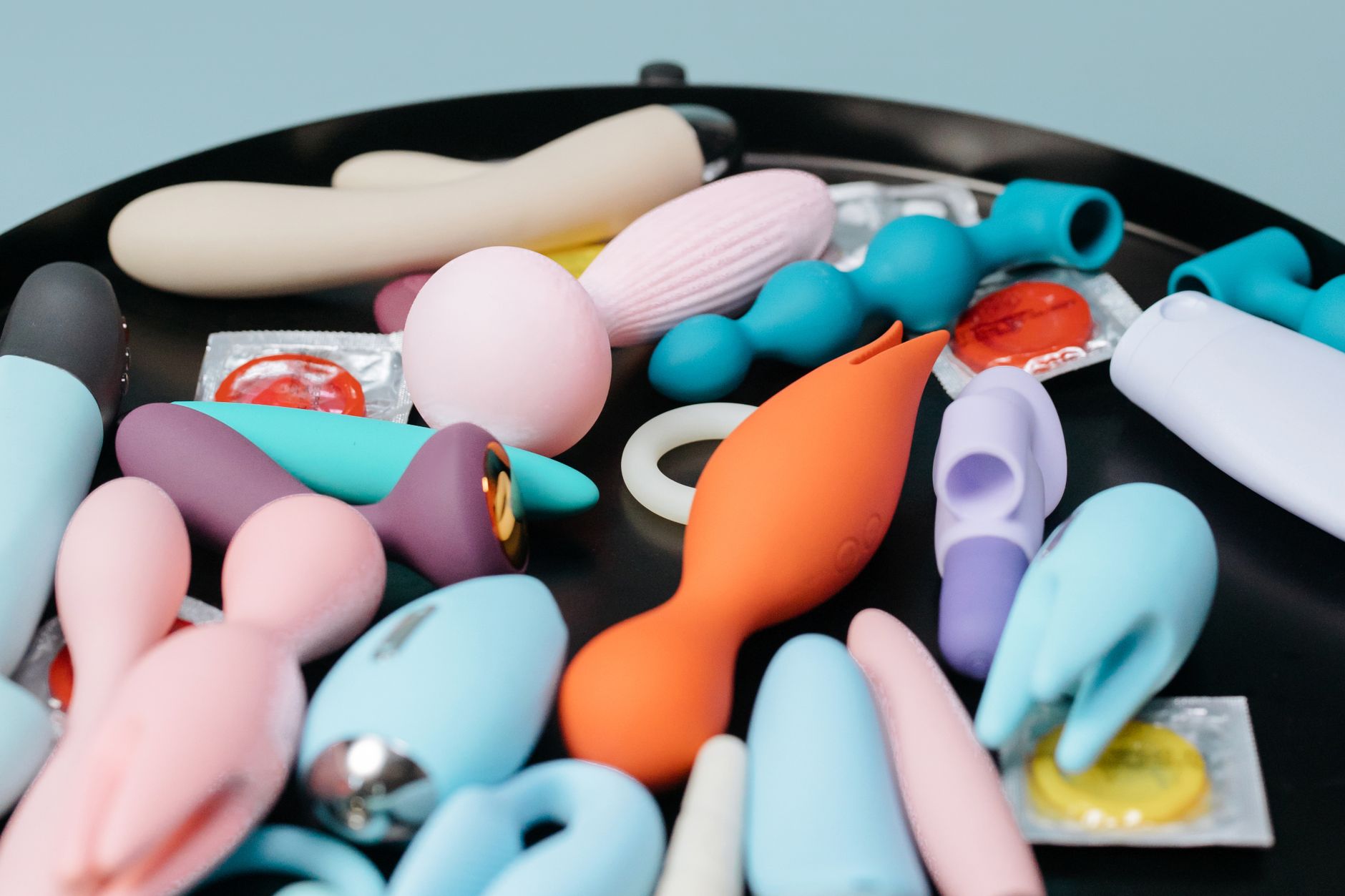
Photo by cottonbro studio on Pexels
Practical logistics
If you're using a lemon clitoral vibrator for the first time, here's the unglamorous stuff that matters:
Timing. When in your cycle do you feel most responsive? For some people, that's mid-cycle. For others, it's right before your period. For some, timing doesn't matter. Track a few weeks and see.
Environment. You need about 15 to 20 minutes where you won't be interrupted. No phone. No mental to-do list humming in the background. If you have kids, that might mean locked door and a white noise machine. That's not weird. That's self-care.
Lube. Even if you don't think you need it, use a little water-based lubricant. It makes the suction of a lemon sexual toy feel less intense if you're sensitive, and more pleasurable if you're not. It's a variable you can control.
Pressure. This is the biggest one. If you're using the lemon sucker and nothing's happening, you might be gripping it too tight or holding it against your body with too much force. Let it rest gently. The suction does the work. You just have to be there.
Common blocks (and what to do about them)
You feel nothing. That's not failure. That's numbness. It usually means your nervous system is still in protection mode. Keep going. It comes back. Sometimes it takes four or five sessions before your body trusts that this is safe.
You feel something, but it's weird. Air suction is different from what most people try first. Give it a week. Your body will either adjust and like it, or it won't. If it doesn't, that's fine. You've got data.
You feel guilty enjoying yourself. That's the shame talking. Notice it. Don't believe it. You deserve pleasure that's just for you, with no justification needed.
Your partner feels threatened. This is relational work, not a toy problem. If your partner feels replaced or inadequate because you're using a lemon clitoral vibrator, that's about their insecurity, not about the device. They might need reassurance. They might need therapy. But their discomfort isn't a reason to abandon your pleasure.
FAQ: Low libido and lemon vibrators
Can using a lemon vibrator actually bring back libido, or am I just avoiding the real problem?
Using a lemon sucker won't fix relationship issues or hormonal problems. But it does interrupt the cycle where low desire feeds shame, and shame feeds more avoidance. It gives your nervous system a direct experience of pleasure without pressure. That's not avoidance. That's building a foundation. Once that foundation exists, you can address the bigger stuff from a place of "I know pleasure is possible" instead of "I think I'm broken."
How long does it take before libido actually comes back?
It varies widely. Some people feel a shift in two to three weeks. Others take two to three months. The timeline depends on how long your libido has been low, what caused it, and whether you're also addressing the relational or hormonal factors. Consistent use matters more than speed.
Should I tell my partner I'm using a lemon clitoral vibrator if I'm using it alone?
Not necessarily at first. But if you want to rebuild desire in the relationship, yes, eventually. You don't need permission. But partnership requires honesty. If you're hiding it out of shame or fear, that's worth examining. If you're just giving yourself privacy while you rebuild, that's healthy.
What if my partner wants to use it with me and I'm not ready?
You can say that. "I need some time to feel comfortable with my own pleasure first. Then we can explore together." You don't have to rush. The lemon sexual toy isn't going anywhere.
Is low libido a sign the relationship is over?
Not always. Sometimes it's a sign the relationship needs attention. Sometimes it's a sign you need individual therapy. Sometimes it's hormonal or medical. Low libido is information, not a verdict. You get to decide what it means.
Can I use a lemon vibrator if I'm on medication for depression or anxiety?
Yes. In fact, some antidepressants lower libido as a side effect, so addressing pleasure might be even more important. If the medication is affecting your sexual response, talk to your prescriber. There are sometimes adjustments you can make. But using a lemon clitoral vibrator is safe alongside medication.
The thing nobody tells you
Low libido often comes with a story. "I'm too tired." "I'm not attractive anymore." "My partner doesn't really want me." "I'm broken." Here's what I've learned: the story is usually wrong.
What's usually true is that desire got crowded out. By stress, by pressure, by predictability, by shame, by unspoken resentment. Not by anything fundamentally wrong with you.
A lemon clitoral vibrator can't fix a relationship. It can't cure depression or fix hormones. But it can do something crucial: it can show your body that pleasure is still possible. That you're not broken. That desire isn't gone. It's just sleeping.
Your job is to give it permission to wake up. That starts with space, gentleness, and no pressure. The rest follows.
Want to talk through what's happening with your libido? Get in touch. I'm here to help you figure out what's real and what's worth changing.