
Let's name the thing nobody talks about
Betrayal doesn't just damage your relationship. It damages your relationship with pleasure itself. After infidelity, a partner's lie, or any violation of trust, many people find that desire doesn't just disappear. It gets tangled up with shame, hypervigilance, and a version of self-doubt that feels almost physical. Your body, which once felt like home, starts to feel like a crime scene.
Rebuilding pleasure after betrayal isn't about "moving on" or "letting it go." It's about reclaiming something that was stolen. And that reclamation often starts alone.
Why shame blocks pleasure (and what's actually happening)
When betrayal happens, your nervous system goes into overdrive. You're scanning for threats. You're questioning every sensation, every moment of desire, wondering if it's safe to feel. That hypervigilance is protective. It's also a total pleasure killer.
There's a second layer, too. Many people internalize betrayal as personal failure. "If I'd been more attractive, more present, more something, this wouldn't have happened." That narrative is false, but it lives in your body anyway. It attaches itself to desire like a barnacle.
When you try to feel pleasure, shame shows up first. It whispers. It tells you that wanting anything for yourself is stupid, or dangerous, or complicit in your own pain. Learning to separate that voice from actual safety signals is the real work.
Why self-pleasure matters more now than ever
Let me be direct: after betrayal, self-pleasure isn't selfish. It's essential data collection.
When you explore pleasure alone, you're gathering evidence that your body still works, that you can feel good without anyone else's participation, and that desire doesn't require anyone's permission. You're also building what therapists call "somatic agency." You're the one in control. You choose the speed, the intensity, the duration. You can stop anytime. You can restart. That autonomy is what betrayal often takes away.
Using a tool like the Lem, a precision lemon clitoral vibrator designed for consistent, gentle suction, removes a layer of vulnerability that many people need early in healing. You're not negotiating sensation with a partner. You're not performing. You're not managing someone else's insecurity about toys. It's just you and a device that does exactly what you tell it to do.
That reliability matters when trust is fractured.
The specific role of a lemon clitoral vibrator in this healing
A lemon vibrator's design is particularly useful after betrayal because it works through suction rather than direct friction. That means several things:
Lower activation barrier. Direct vibration can feel too intense when you're already in a nervous state. Suction is gentler, more diffuse. It doesn't demand an immediate, overwhelming response. That gentleness gives your nervous system permission to gradually engage rather than performing arousal you don't feel.
Sensation you can modulate instantly. With the Lem, you control the pattern and intensity with precision. Pattern one feels like a whisper. Pattern five is more insistent. You're not guessing. You're not hoping your partner reads your mind. You're pressing a button and getting exactly what you asked for. That predictability is grounding.
Pleasure that's separate from intimacy. Using a lemon sexual toy solo is distinct from sex with a partner. That boundary matters. You're not rebuilding coupled pleasure yet. You're rebuilding your own capacity first. That's the right order.
How to start: the practical roadmap
Week one: just presence. Hold the Lem. Look at it. Get comfortable with it existing. Don't use it yet. Notice what feelings come up. Shame? Excitement? Guilt? All of those are normal. Just observe without judgment. Your job isn't to feel good yet. It's to feel what's actually there.
Week two: low stakes exploration. Use the Lem on the lowest pattern, for two minutes max. No pressure for arousal, no goal of orgasm. You're just gathering data. Does this feel safe? Does it feel numb? Does it create any pleasure, even tiny? Notice what you notice. Stop whenever you want. There's no finish line.
Week three and beyond: listen to what your body wants. By now, you have a baseline sense of how your body responds to consistent, gentle stimulation. Maybe you want more time. Maybe you want higher patterns. Maybe you want to use it only during certain times of day when anxiety is lower. Honor what you discover. This isn't a protocol. It's a conversation between you and your own pleasure.
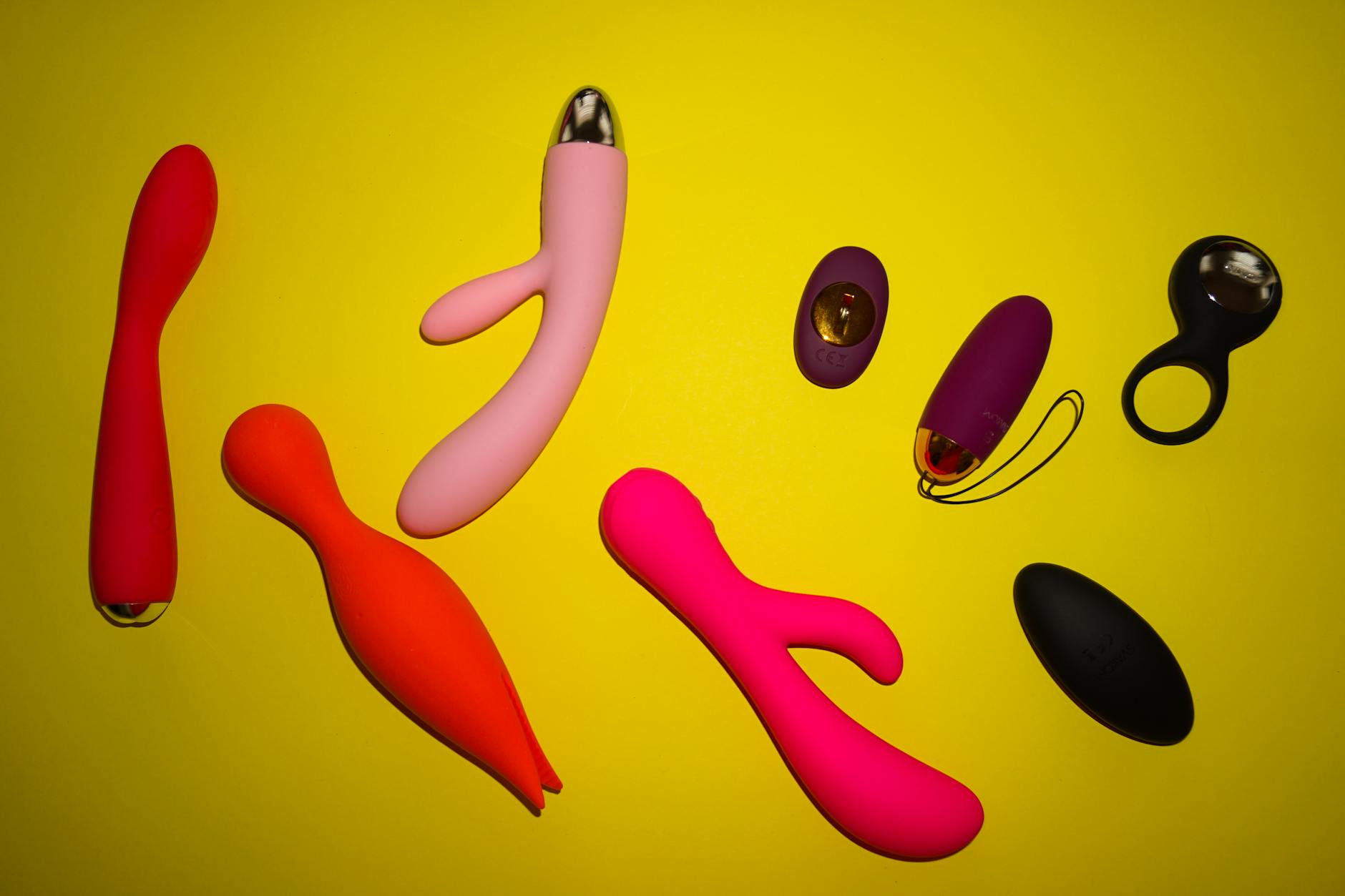
Photo by FounderTips on Pexels
The shame spiral and how to interrupt it
Here's what happens: you start to feel pleasure, then a voice appears saying "You shouldn't be happy, you should be suffering, you're betraying yourself by moving forward." That voice is not truth. It's a trauma response. But it feels absolutely real.
When shame shows up, pause. Name it. "This is shame. It makes sense that it's here. And it's not accurate information." You're not being disloyal by feeling good. You're not abandoning the pain by healing. You're not replacing your grief with numbness. You're expanding. You're allowing complexity.
Many people find it helpful to have a note on their phone that says exactly what they need to hear in that moment. "My pleasure is not a betrayal. My body deserves to feel good. I am allowed to heal." Read it when shame arrives. Say it out loud. Let your nervous system hear the truth even if your brain doesn't believe it yet.
When to involve your partner (and when not to)
If you're still with the person who betrayed you, solo pleasure work should come first. Full stop. You need to establish your own baseline of desire and safety before couples' pleasure is even on the table.
When you do eventually rebuild intimacy together, introducing the Lem can be complicated. Some partners feel threatened by toys. Some feel relieved. Some feel turned on. None of those reactions obligate you to do anything different. You're not using the lemon vibrator to be sexier for them. You're using it because it works for your body.
If introducing a toy feels emotionally unsafe right now, wait. There's no rush. Your healing doesn't operate on anyone else's timeline.
The neuroscience of why this works
When you experience pleasure, especially pleasure you've chosen and controlled, your brain releases dopamine. That's the same chemical involved in learning, motivation, and reward. Over time, consistent experiences of safe, self-directed pleasure literally rewire the neural pathways associated with desire. You're not faking it until you make it. You're teaching your nervous system that pleasure can be safe again.
This takes time. Months, often. But it works.
People also ask
Is it normal to feel nothing when using a lemon vibrator after betrayal?
Completely normal. Your nervous system is protecting you. Numbness after trauma isn't a sign that healing won't work. It's a sign that you need gentleness and patience. Keep showing up. Keep using the Lem on low patterns. Eventually, sensation returns. And when it does, it often feels like a small miracle.
Can I use a lemon clitoral vibrator if I'm still experiencing intrusive thoughts about the betrayal?
Yes, but with a caveat. If the intrusive thoughts become overwhelming during self-pleasure, stop. Your body is trying to tell you something. You might need more time before solo exploration feels safe. There's no shame in that. Talk to a therapist who specializes in betrayal trauma. They can help you build capacity before pleasure work begins. Many people find that using a lemon vibrator when you have low sensation or numbness requires the same kind of nervous system work as healing from betrayal.
Should I tell my partner I'm using a lemon vibrator?
That depends on the relationship and what feels safe to you. If you're staying with the person who betrayed you and you want to rebuild intimacy, transparency is usually helpful eventually. But you don't owe them access to your healing process while you're still building it. Use the time alone to figure out what you want. Then decide what to share. If your partner pressures you to reveal every detail of your solo pleasure, that's another red flag worth examining with a therapist.
How long does it take to feel pleasure again after betrayal?
There's no standard timeline. Some people reconnect with desire within a few months of consistent self-pleasure work. Others take a year or more. The pace depends on the severity of the betrayal, your support system, whether you're in therapy, and a hundred other factors. What matters is consistency, not speed. Using the Lem twice a week for six months is better than frantically using it daily for two weeks and then abandoning it.
Can a lemon vibrator help if I'm questioning whether to stay in the relationship?
Indirectly, yes. When you reconnect with your own body's signals and what brings you pleasure, you also reconnect with your intuition. You start to notice what you actually want rather than what you think you should want. Sometimes that clarity leads to staying and rebuilding. Sometimes it leads to leaving. Either way, you're making the choice from a grounded place rather than from fear or numbness. That matters.
What if pleasure feels like a betrayal to my own pain?
That's the shame spiral again. Healing isn't an insult to the pain you've experienced. It's not erasing what happened or saying it was okay. It's expanding your life to include more than suffering. You can honor the betrayal and also use a lemon sexual toy. You can grieve and also feel good. Those aren't contradictions. They're the texture of being human. A good therapist will help you hold both.
The quiet power of reclaiming your own pleasure
Betrayal takes many things. It takes trust. It takes the sense of safety in your relationship. It takes a version of yourself that felt secure. But it doesn't have to take your capacity for pleasure. Not permanently.
When you use a lemon clitoral vibrator intentionally, you're not just having an orgasm. You're telling your body that you believe in its capacity to feel good again. You're telling your nervous system that safety is possible. You're gathering evidence that betrayal doesn't have the final word.
Start small. Start alone. Start without pressure. Let the Lem become a tool for reclamation rather than escape. And be patient with yourself. Healing isn't linear. Some weeks you'll use it and feel nothing. Other weeks you'll feel everything. Both are part of the process.
You deserve to feel good again. Not despite what happened. But because you're still here, still trying, still willing to rebuild. That's not weakness. That's extraordinary strength.
If you're working through betrayal and want support beyond self-pleasure, reach out. We're here to listen without judgment and help you figure out what comes next.