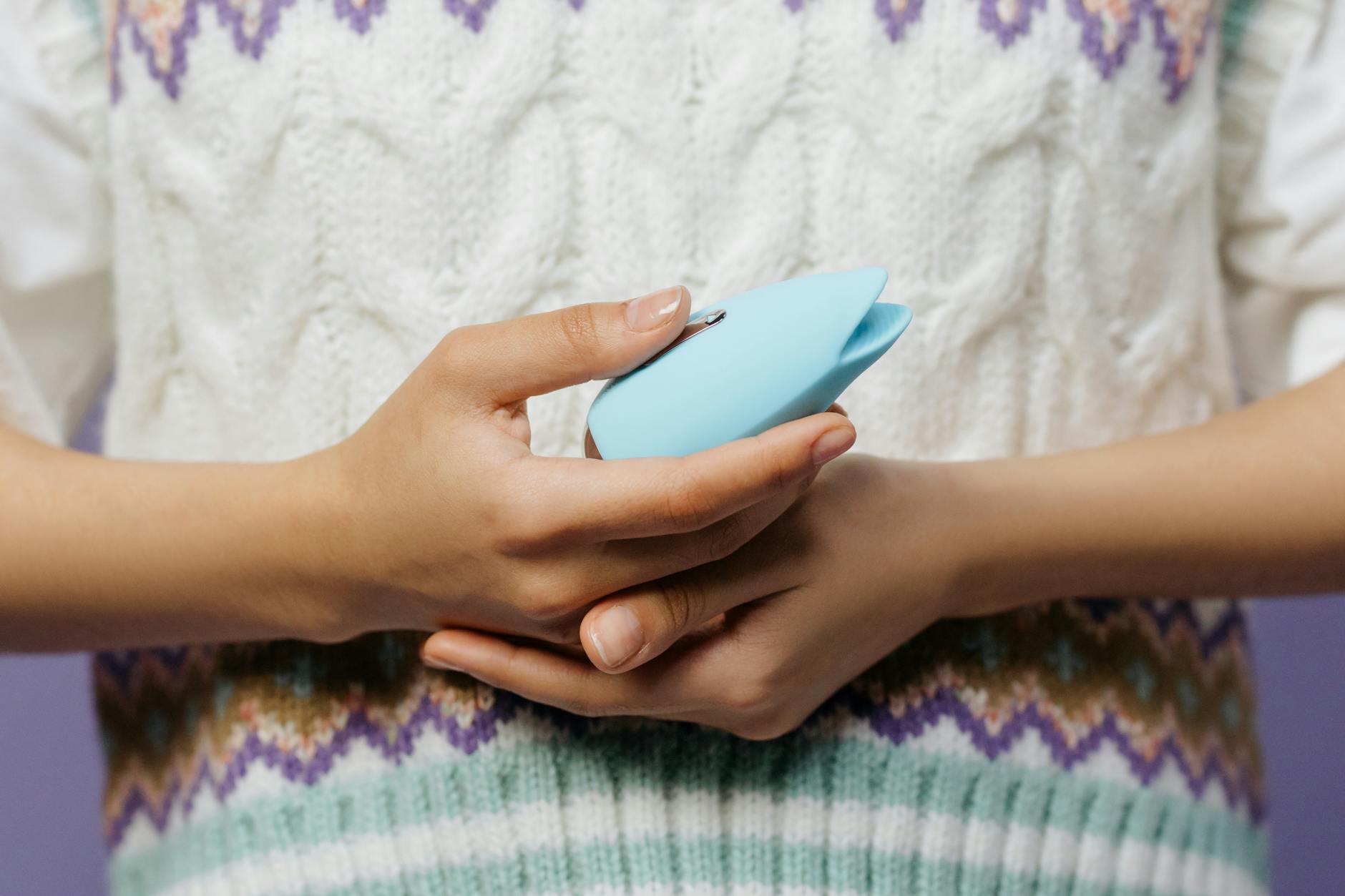
When your partner says they want to try toys together
Here's the thing: couples who avoid talking about adding toys to their sex life aren't protecting intimacy. They're protecting themselves from a conversation that feels risky. And that risk is exactly what keeps connection shallow.
If your partner has brought up exploring a lemon vibrator or other toys, or if you're thinking about suggesting it, the anxiety you're feeling is normal. But it's also solvable.
Why this moment matters more than you think
Introducing toys isn't actually about the toy. It's the first time you're both saying out loud: "I want to try something new. I want your pleasure to matter this much. I'm willing to be a little awkward about it."
That's vulnerability. And vulnerability is where real intimacy lives.
Here's what most couples get wrong: they think the toy is the centerpiece. It's not. You are. The toy is just permission to pay attention differently.
Starting the conversation without it feeling like a negotiation
If your partner initiated this, don't immediately say yes and then panic about when to actually do it. Instead, say something like: "I'm into this. Can we talk about what you're curious about?" That's it.
They might be thinking about a specific toy (a lemon clitoral vibrator, for example) or just the idea of toys in general. Either way, the question is the same: What made them curious?
Listen without defending or over-explaining your body. If they say, "I want you to feel more," don't jump to "But I feel plenty." They might just mean they want to watch you experience something new. That's not criticism. That's investment.
Why a lemon vibrator actually works for this moment
If you're starting from zero toy experience, a lemon sucker like the ones from Helo Nancy's Slem is less intimidating than a traditional vibrator for couples to explore together. The sensation is gentler at first, the design is approachable (it doesn't scream "industrial equipment"), and because it operates on suction rather than buzzing, there's less pressure for it to feel good immediately.
That matters because the first time you use a toy with a partner, you're managing both the physical sensation and the emotional weight of being watched. Anything that reduces one of those loads helps.
Setting up the first time so it actually goes well
Three practical things before you start:
Timing. Pick a time when you're both rested and haven't been discussing logistics, bills, or anything else boring for at least an hour. The mental shift from "ugh, the dishwasher" to "let's try something new" takes longer than you'd think.
Lubrication. Even if you don't usually need it, use water-based lube. It reduces friction, which means the sensation of the toy is softer and more pleasurable. It also signals that you're taking this seriously and removing obstacles. That matters psychologically.
Permission to pause. Before you start, agree that either of you can say "let's wait" or "let's try something else" without explanation or hurt feelings. Most couples skip this step and then both feel trapped when something isn't working. Naming the escape hatch in advance makes it easier to actually relax.
What to expect the first time (and why it rarely feels like the porn version)
Here's what actually tends to happen: you'll feel a little self-conscious at first. Your partner might feel awkward watching. The toy might not feel like much, or it might feel surprisingly good. You might laugh. You might feel emotional. You might want to stop after five minutes.
All of that is completely normal.
The first time isn't about achieving anything. It's about crossing a threshold. You're saying "we do this together" and proving you mean it.
Many couples need a second or third time before anyone stops thinking about how they look and starts actually feeling the sensation. Your job the first time isn't to have an earth-shattering orgasm. It's to be present and curious.
How your partner's role changes everything
The magic happens when your partner stops treating the toy like competition and starts treating it like collaboration. This looks like:
They touch you while you use it. They kiss your neck. They watch your face and check in. They take it slow when you want slow. They speed up when you ask. They're not standing back waiting for the toy to do all the work.
When partners show up like that, using a lemon clitoral vibrator becomes less "me and my toy" and more "we're figuring this out together."
If your partner just hands you the toy and watches from a distance, the experience feels lonely, not connected. So talk about this in advance. "I want you to stay close" is all it takes.
When to bring up what happened
After, give yourself at least an hour before analyzing. Shower if you want to. Have water. Don't jump into "So what did you think." You're both still in your nervous systems.
When you do talk about it, lead with something true: "I felt nervous but also heard" or "That was weird but I want to do it again" or "I wasn't sure what would happen and I'm still not, but I liked that we were together."
Your partner will follow your lead. If you're defensive, they'll get defensive. If you're curious, they'll be curious.
This is where how to use a lemon vibrator when you want deeper connection with your partner builds from here. You've opened a door. Now you get to decide what's behind it.
The second time is usually better
Most couples report that the second time feels easier. The novelty is gone, so you can actually focus on sensation instead of anxiety. You know the toy exists and you've lived through that together. The world didn't end.
By the second or third time, many people stop performing and start actually receiving pleasure. That's when you find out if this thing actually works for your body, or if you need to explore other options.
Honestly, the best thing about introducing toys as a couple is what it teaches you: you can talk about things that feel risky. You can ask for what you want. You can be vulnerable and it works out.
That skill transfers everywhere else.
People also ask
What if one of us is uncomfortable with the idea?
Then you're not ready, and that's fine. Uncomfortable is not the same as a hard no. If your partner says "I'm nervous but willing to try," that's workable. If they say "I don't want to," respect that and don't push.
Please don't interpret a partner's hesitation about toys as rejection of you. Some people have past trauma, religious baggage, or just genuine discomfort with the idea. Pressuring them will backfire. Instead, ask what would make them feel safer. Maybe they watch first. Maybe they research together. Maybe they decide it's not for them, and that's okay.
Is it weird if the toy feels better than my partner's touch?
No. A lemon sucker is specifically designed to stimulate nerves in a way that hands can't replicate. That doesn't mean your partner's touch doesn't matter. It means different sensations do different things.
Many couples find that toys enhance partnered sex rather than replace it. The toy handles one kind of stimulation while your partner handles everything else.
Should we do this instead of our usual sex?
Not instead of. In addition to. Bringing a toy into your regular routine means you're expanding your toolkit, not replacing what already works.
Think of it like discovering a new restaurant doesn't mean you stop cooking at home. You're just adding options.
What if it doesn't feel good the first time?
Then you have data, not a failure. Your body might need a different kind of stimulation, or the timing might be off, or you might need more warm-up time. Try it again with a different approach. Change the angle, the pressure, the speed.
Or try a different toy entirely. Not every lemon vibrator design works for every body. Some people prefer the suction sensation, others prefer traditional vibration.
How do we clean it after?
Wash it with warm water and mild soap, or use a toy cleaner if you have one. Dry it completely before storing. If your toy is silicone, store it away from other silicone toys to prevent material degradation.
Taking care of the toy together sends a signal: this is something we're responsible for, something we've decided matters. That's relationship building in its smallest, most practical form.
What if it kills the mood?
Then you stop and do something else. The goal isn't to power through awkwardness in pursuit of an orgasm. The goal is to explore together without pressure.
Many couples find that removing the goal (orgasm) and focusing on curiosity (what does this feel like) actually leads to better sex. Your nervous system relaxes when there's nothing to achieve.
What comes next
Once you've crossed this threshold with your partner, sex changes a little. You've both admitted you want to experiment. You've both shown up for vulnerability. You've both learned that trying something new doesn't destroy intimacy. It deepens it.
That's the actual gift of introducing a lemon vibrator to your partnership. The toy is secondary. The fact that you're willing to be curious together is everything.
Ready to start this conversation? Reach out to us at /contact if you have questions about which option might work best for you and your partner.