Let's be real about performance anxiety
Performance pressure kills pleasure. Not slowly. Instantly. The moment your brain switches from "what does this feel good?" to "am I doing this right?" or "should this be happening faster?", your body checks out. Your arousal flattens. Sensation dulls. You end up chasing an orgasm that keeps retreating because you're not actually present for it.
Most people learn to perform pleasure before they learn to feel it. We absorb messages about what sex should look like, how long it should take, what the finish line looks like. Then we spend years trying to hit those marks instead of listening to what our own body actually wants. Solo pleasure is supposed to be the one place you don't have to do that. But if you've spent decades performing, your nervous system doesn't know how to switch modes.
Why solo pleasure feels so loaded
Here's what I see in sessions constantly: people come in saying they "can't orgasm alone" or "don't know what they want." What they actually mean is their brain won't stop narrating. There's a voice running commentary. "Is this taking too long?" "Should I be more turned on by now?" "What if I'm broken?" That voice is performance anxiety wearing a different costume.
It shows up for everyone, but it hits hardest for people in long-term relationships. If you've spent years prioritizing a partner's pleasure, or adjusting your response to match their expectations, solo time can feel weirdly selfish or wrong. You might feel guilty about wanting something just for you. You might worry that touching yourself means something about your relationship.
It doesn't. It means you deserve to know your own body.
The other piece: solo pleasure without an audience feels risky. There's no one to validate it. No one saying "that's hot" or "you're doing great." You have to be the person who says those things to yourself. And most of us were never taught how.
What happens when you remove the pressure
Three things shift when you stop performing:
1. Your nervous system relaxes. Arousal lives in the parasympathetic nervous system (rest and digest mode). Performance anxiety is sympathetic activation (fight or flight). You can't be in both at once. The moment you decide "I'm just here to feel what I feel, with no agenda," your body actually has permission to respond.
2. You notice sensation you've been missing. When you're not checking a box, you notice the texture of your breath. How your skin responds to touch before direct stimulation. The buildup that actually leads somewhere. Most people who think they "can't feel much" are actually just too tense to register anything.
3. Orgasms become optional, not essential. This sounds backwards, but it's the thing that actually creates consistent pleasure. The moment you decide an orgasm would be nice but isn't required, you relax enough that orgasms happen. Weirdly, they happen more, not less.
How a lemon vibrator changes the dynamic
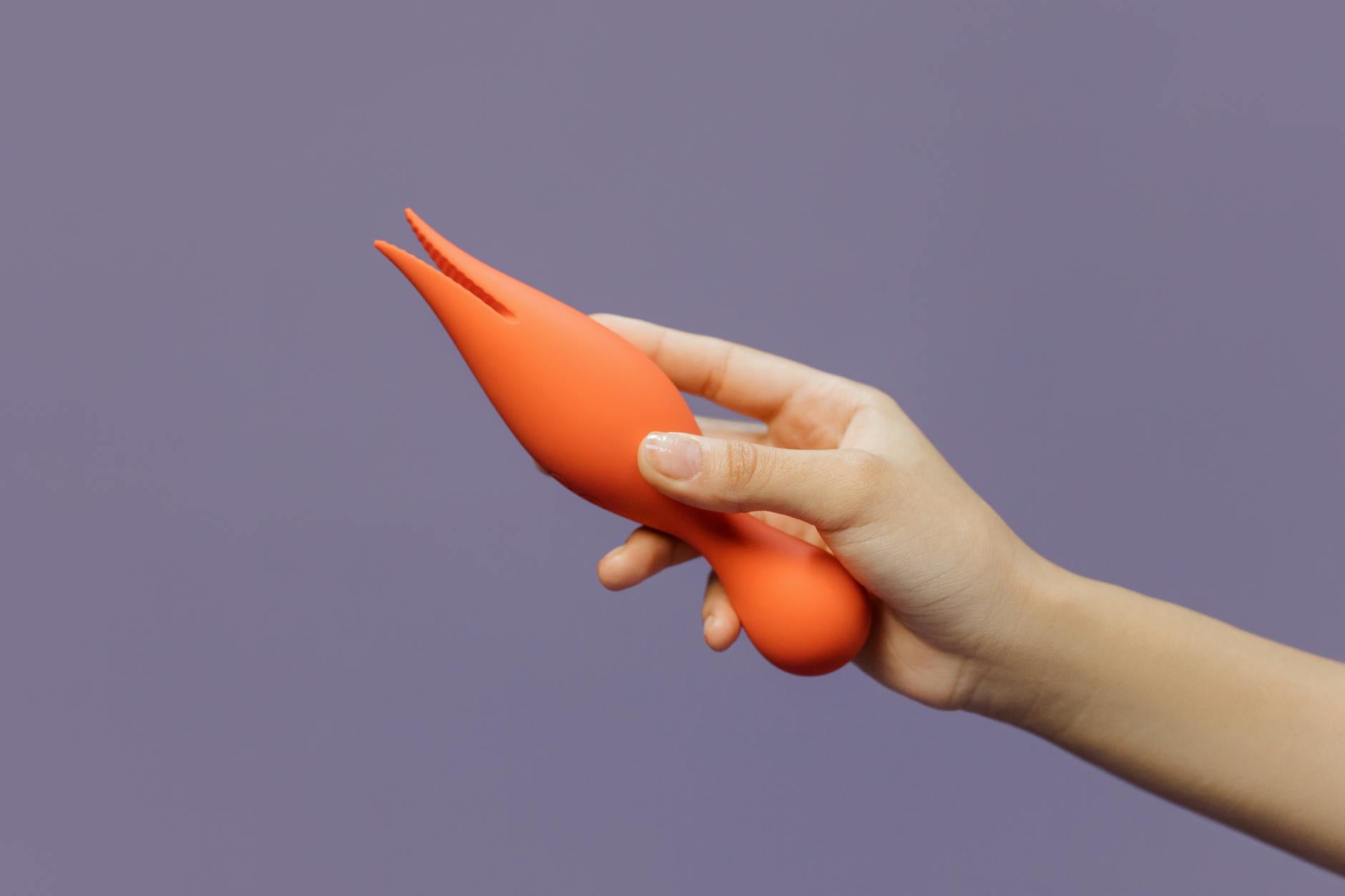
A lemon clitoral vibrator (like the Lem by Helo Nancy's Slem) is specifically designed to remove one major source of performance anxiety: figuring out what technique is "right."
Traditional vibrators require you to angle them correctly, apply the right pressure, move them the right way. You're constantly adjusting. That adjustment is micro-managing. It keeps you in your head.
Air-suction vibrators work differently. The suction does the work. You don't have to think about angle or pressure or rhythm. You set a pattern and your body responds. That sounds small, but it's the difference between giving yourself instructions and giving yourself permission.
Here's the practical shift: instead of "am I using this correctly?" your only job is "does this feel good right now?" That's it. That's the whole thing. Your attention can stay in sensation instead of splitting between sensation and self-judgment.
Setting up for genuine pleasure
Four conditions matter:
Space and time. Not stolen minutes where you're half-listening for interruption. Real time. Even 30 minutes where you've actually told your brain this is protected. Lock the door. Put your phone in another room. Tell your partner you need an hour. Whatever it takes to make this non-negotiable.
No agenda. Seriously. Not "I want to come in 15 minutes" or "I want to test if this works." Those are performance metrics. The agenda is "I want to be here and feel what's available." That might be a full orgasm. It might be just noticing how touch feels today. Both are the goal.
Actual arousal time. Most people rush. They dive straight into direct stimulation because they're anxious it won't work. But arousal is a buildup. Spend 10-15 minutes doing literally anything that feels good: your favorite music, touching yourself gently, thinking about something that turns you on, reading something that lands for you. Let your nervous system actually warm up.
Lube, always. Not because anything's wrong with you. Because friction requires you to tense up, and tension is the enemy of sensation. Water-based lube means your nervous system can stay relaxed while you're being stimulated.
The pleasure literacy part
Here's the thing no one tells you: you have to learn how to receive pleasure. It's a skill, not an instinct.
Most people (especially women) learn to be good at creating pleasure for others. Figuring out what a partner needs. Staying present with their experience. Your attention is outside yourself. Then you're supposed to flip that on solo play and suddenly be great at paying attention to your own sensation. That doesn't work.
You have to practice. And that practice looks like: put your hand on your own skin. Notice what texture feels good. Slow down enough to feel the difference between one touch and another. That's literacy.
A lemon clitoral vibrator helps because the sensation is clear and distinctive. You're not wondering if you're feeling something. You definitely feel it. That clarity teaches your brain to notice. Over time, you start noticing subtler sensations. Your sensitivity calibrates. You learn what you want.
This is why how to use a lemon vibrator when clitoral sensitivity changes during your cycle matters so much. Once you've learned to notice, you can track your own patterns. You're not broken if your body wants something different on day 7 than day 20. You're just responsive.
When guilt shows up
It will. For a lot of people, solo pleasure still carries moral weight. You might feel selfish. You might feel like you're "supposed" to only want sex with a partner. You might worry that being really into your own pleasure is somehow unfaithful or means something's wrong with your relationship.
None of that's true. Solo pleasure is actually one of the healthiest relationship skills you can develop. It teaches you what you want. It prevents resentment. It means you're not dependent on another person to feel good, which paradoxically makes you a better partner because you're not desperate.
If the guilt is loud, that's information. It usually means somewhere in your history you learned that your pleasure wasn't as valuable as someone else's. That's a message worth questioning.
FAQ
Can I use a lemon vibrator if I've never had an orgasm?
Yes. The suction stimulation feels so different from traditional vibration that people often have their first orgasm with an air-suction design. But here's the key: if orgasm is your only goal, it probably won't happen. Your anxiety will keep you tense. Use it to feel sensation, and let the orgasm be a bonus, not the point.
How long should this take?
There's no clock. Some days it's 10 minutes. Some days it's 45. The moment you're checking the time, you're performing again. If you notice yourself rushing, pause. That's your body telling you there's still some performance pressure running underneath.
What if I use this and don't feel much?
Either you're not actually aroused (so start with more warm-up time), or you're still too tense (slow down even more, add more lube, give yourself real permission). The suction is strong. You'll feel it. If you don't, something in your nervous system is still guarded.
Is it weird to prioritize my own pleasure?
No. It's actually the baseline requirement for healthy sexuality. You can't give what you don't have. Learning what feels good to you makes you a better partner and a happier person.
How often should I be doing this?
Honestly? As often as it sounds appealing. This isn't a prescription or a routine. It's not something you "should" do. It's something you do because it feels good. If that's once a week or three times a week, great. If you go a month without thinking about it, that's also fine. The moment you turn it into an obligation, you've flipped back into performance mode.
What if my partner finds out?
Tell them. If you can't tell your partner about solo pleasure, that's a separate relationship conversation worth having. And honestly, how to use a lemon vibrator when you want deeper connection with your partner addresses exactly this. Most partners are relieved. It takes pressure off them. It means their job isn't to be responsible for all your pleasure.
The real shift
Using a lemon vibrator without performance pressure isn't really about the toy. It's about learning that your pleasure is valuable enough to protect. That what feels good to you matters. That you don't need anyone's approval to touch your own body in ways that feel amazing.
That's the whole point. Not the orgasm. Not the technique. You, alone, discovering what you actually want. That's where everything starts.
Your body knows how to feel good. It's been waiting for you to get out of the way and let it.