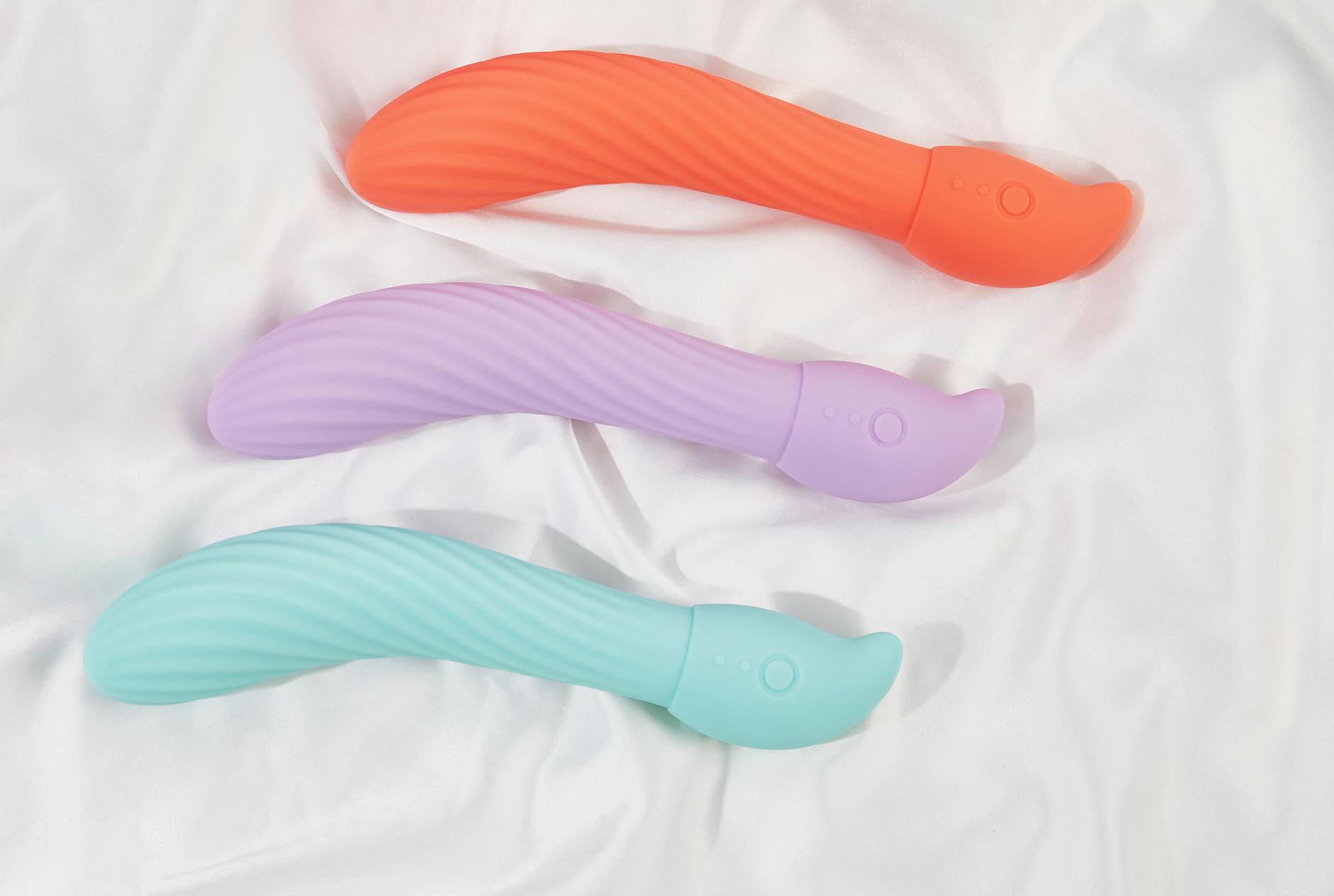
How Lemon Clitoral Vibrators Work Better for Sensitive Vulvas After Hormonal Changes
Something shifted. Your clitoris used to respond one way, and now it doesn't. That vibrator you loved for years suddenly feels too intense, or maybe not intense enough. Or maybe it just feels numb, like you're going through the motions instead of actually feeling anything.
You're not broken. Your clitoris is responding to a real physiological change. And there's a reason why lemon clitoral vibrators, which work through suction rather than direct vibration, often feel like a completely different experience.
What actually happens to your clitoris when hormones shift
Let's start with the anatomy because this is where everything clicks into place. Your clitoris has three main parts: the external glans (the visible part), the internal body, and the two crura (the roots that extend inside your body). The glans is packed with about 8,000 nerve endings, which sounds like a lot until you realize that's roughly the same concentration as the tip of a penis. That sensitivity is not a bug. It's the entire point.
When your hormones change, estrogen levels drop. This affects the tissue covering your clitoris in ways that cascade through your entire experience of pleasure. The tissue becomes thinner. The blood vessels that feed that tissue get less support, which means less engorging, less swelling, less of that electrical response you used to feel building up.
Here's the thing nobody explains clearly: your clitoris doesn't have fewer nerve endings after hormonal shifts. It has the same number of nerves in thinner tissue. That's why direct vibration can feel either too intense or weirdly numb. You're getting the same buzz frequency hitting tissue that's now more sensitive to friction and less able to absorb the stimulus broadly.
Why traditional vibrators stop working the same way
Most vibrators work through oscillation. The motor creates a back-and-forth or circular motion at the tip. This creates friction against the tissue. When your vulva is well-lubricated and your tissue is thick enough, that friction spreads the stimulation across the nerve endings in a way that feels building, intense, cumulative.
When your tissue thins or your clitoris becomes more sensitive, that same friction can feel sharp, almost painful, or paradoxically numb because the stimulus is concentrating on one spot instead of rippling across the whole area.
You might turn the vibration down, but then it disappears entirely. You might add lube, which helps temporarily. But there's a ceiling to what a traditional vibrator can do once clitoral sensitivity shifts.
How lemon suction vibrators work differently
Lemon clitoral vibrators, like the Hello Nancy Lem, don't rely on friction. They use suction and pulsing. Here's the mechanical difference: instead of a motor vibrating side to side, a suction device creates rhythmic pulses of gentle pressure and release around the clitoral glans.
Think of it this way. A traditional vibrator is a hammer. A lemon sucker is a kiss. The kiss doesn't vibrate the tissue. It creates a gentle compression and release that stimulates nerves through pressure changes rather than friction.
Why does this matter for sensitive tissue? Three reasons.
First, no friction. If your clitoris is tender because the tissue is thinner or more reactive, friction can trigger pain or numbness. Suction avoids this entirely. You're getting stimulation without microscopic rubbing.
Second, broader nerve activation. Suction stimulates the entire glans at once, not just the point where a vibrator tip touches. This distributes the sensation across all those 8,000 nerve endings instead of concentrating it in one spot. Many people find this creates a different kind of orgasm, deeper and more full-bodied, because the stimulation is happening across a wider area.
Third, easier to modulate. With a traditional vibrator, your options are intensity levels. With a lemon clitoral vibrator, you control both the suction strength and the pulse pattern. This gives you way more flexibility when you're figuring out what works post-hormonal change.
The clitoral sensitivity piece that changes everything
Here's what I see clinically. People assume that increased clitoral sensitivity after hormonal shifts means "I need gentler stimulation." Sometimes true. But often what's actually happening is "I need different stimulation."
Traditional vibration might feel overwhelming because it's directional. Suction feels okay because it's enveloping. One person describes it as the difference between a pointed beam and a soft embrace.
Your clitoris hasn't lost the ability to feel pleasure. The nerve endings are still there. But the tissue holding those nerves has changed texture and thickness, which means the same stimulus stops translating the same way to your brain.
A lemon clitoral vibrator essentially works around that tissue change by using a completely different mechanism. It's not "gentler" necessarily. It's orthogonal. It bypasses the friction problem entirely.
Why this matters for different phases
If you're coming off hormonal birth control, your sensitivity might bounce around for a few months as your natural cycle re-establishes. If you're perimenopausal or postmenopausal, the sensitivity shift is more permanent, which is when people often decide to switch to lemon suction vibrators full-time.
If you're on antidepressants that have numbed your sensation, a lemon clitoral vibrator can cut through that numbness in ways traditional vibrators can't, because the broader nerve activation sometimes overrides the medication's suppression.
If you're recovering from pelvic floor injury or tension, suction is gentler on the tissues while still providing adequate stimulation.
The common thread: when tissue is compromised or sensation is altered, a lemon sucker works better than direct vibration. The mechanism doesn't compete with the tissue change. It works with it.
How to use a lemon vibrator if you're new to suction
First time with a lemon clitoral vibrator, start with the lowest setting. The sensation feels different enough that what feels moderate at setting one might feel intense compared to what you expected.
Wet your vulva first. A tiny bit of arousal fluid or water-based lubricant helps with the seal, which helps with the suction. Don't use too much lube or the seal won't create properly and you'll lose the sensation entirely.
Position it so the entire glans fits inside the opening, not just the tip. This is different from a traditional vibrator. You're creating a seal, not just placing the tip against the tissue. If it doesn't feel sealed, reposition slightly.
Once it's sealed, turn it on. You'll feel the suction immediately. Start with the pulsing pattern rather than constant suction. Most lemon suction vibrators offer multiple patterns, and pulsing tends to feel more similar to what you're used to from traditional vibrators, just without the friction.
Build up from there. You can increase intensity, switch patterns, combine suction with penetration. But give yourself a few sessions to get used to how this feels against your newly sensitive tissue before you decide if it's working.
The research on clitoral sensitivity and stimulation methods
While there isn't a ton of peer-reviewed research on suction vibrators specifically, the neuroscience of how clitoral tissue responds to pressure versus friction is well established. Pressure-based stimulation activates mechanoreceptors (the pressure-sensing nerves) more broadly. Friction-based stimulation is more directional and concentrated.
When tissue is inflamed, thinner, or hypersensitive, distributed stimulation outperforms concentrated stimulation. That's why oral sex often feels better than penetration when clitoral tissue is sensitive. Suction vibrators are basically a way to get that broad, distributed pressure from a device.
When lemon clitoral vibrators aren't the right choice
If you have very low sensation, you might need more intensity than a lemon sucker provides. If you like deep internal stimulation and external clitoral work simultaneously, you'll need a partner's hands or a different toy shape.
If you're not experiencing sensitivity changes, a traditional vibrator might still be your best tool. Not everyone needs to switch. But if your usual vibrator stopped working the way it used to after a hormonal change, a lemon vibrator is worth trying.
FAQ
Can you use a lemon clitoral vibrator if you're still on hormonal birth control?
Absolutely. Some people on hormonal birth control have clitoral sensitivity issues from the hormones themselves, not from coming off them. If that's you, a lemon suction vibrator can be really helpful. The mechanism works for any source of sensitivity.
Do lemon vibrators work if you have numbness from antidepressants?
Sometimes, yes, but not always. The broader nerve activation can cut through numbness for some people. But medication-induced numbness is partially neurological, not just tissue-based. A lemon suction vibrator is worth trying, but if it doesn't work, that's not a failure. You might need a different approach, including talking to your prescriber about alternatives.
How often do you need to recharge a lemon vibrator?
Most lemon vibrators, including the Lem, are rechargeable and typically last 1-2 hours per charge. Charge it before you need it, the way you would a phone.
Is suction uncomfortable if you have a short clitoral hood?
Some people with shorter hoods find suction uncomfortable because there's not enough soft tissue to create a seal. If that's you, you might need to try different cup sizes if the device offers them, or you might find that direct vibration works better for your anatomy. Bodies are different.
Can a partner use a lemon vibrator on you, or is it just for solo play?
A partner can absolutely use it on you. Some people actually prefer having a partner control the intensity and patterns. It can be a great addition to partnered sex. The sensations are different enough that some couples find it adds novelty to their routine.
Will a lemon clitoral vibrator hurt if your tissue is really irritated?
If your tissue is actively inflamed or in pain, you should take a break from any stimulation until the irritation settles. Once it's calmer but still sensitive, a lemon suction vibrator is gentler than direct vibration because there's no friction. But if touching the area causes sharp pain, talk to a gynecologist before using anything.
Your clitoris is worth understanding
Hormonal changes alter tissue. That's not failure. That's biology. And when biology changes, the tools that used to work sometimes need to change too. Lemon clitoral vibrators exist because someone realized that friction-based stimulation stops being the best option once tissue sensitivity shifts. That's smart design meeting real bodies.
Your clitoris has the same nerve density it always did. You deserve stimulation that works with how your tissue is now, not frustration that it doesn't respond the way it used to. A lemon vibrator isn't a band-aid for a broken body. It's a tool designed for tissue that's changed.
Ready to try something different? Check out the buying guide to explore your options, or reach out to us at /contact if you have questions about which device might work best for your specific situation.